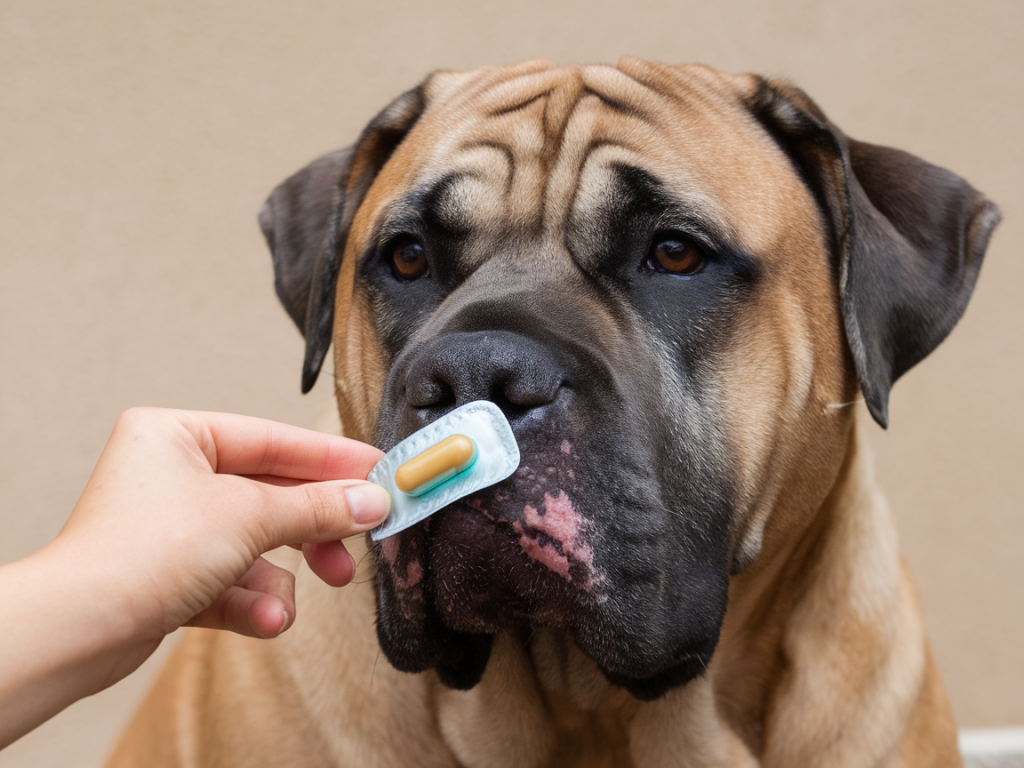
Giving medication to a Bullmastiff can feel like trying to spoon-feed a stubborn brick — and if you’ve owned the breed long enough, you know they are masters of the "I will not open my mouth" game. Over the years at Shadowguard Bullmastiffs, I’ve developed gentle, consistent methods to get pills and liquid meds into even the most resistant dogs without force. This isn’t about trickery; it’s about building trust, using the right tools and treats, and teaching your dog to cooperate willingly.
Why force-free matters
When a dog resists medication, our instinct is often to hold them down and get it over with. That works short-term, but it can damage trust and make future administrations harder. Bullmastiffs are sensitive to pressure and can become fearful or defensive if handled roughly. My approach focuses on desensitization, positive reinforcement and practical tools so medicine becomes part of routine — not a traumatic event.
Essential tools I keep in my kit
Having the right equipment makes a huge difference. Here are items I recommend and why:
Pill pockets (e.g., Greenies Pill Pockets): great for hiding tablets when taste isn’t an issue.Soft, odourless treats for positive reinforcement — small training treats that can be used repeatedly.Flavoring agents or compounding — ask your vet about flavored formulations or compounding pharmacies that can make pills or liquids palatable (chicken, beef, liver flavors).Oral syringe (1–5 ml) with a soft tip for liquids — more control and less spillage than pouring from a bottle.Pill crusher / splitter — sometimes tablets can be crushed and mixed into food, but always check with your vet first.Long-handled pill dispenser (pill gun) — useful for larger breeds, but I use it only as a last resort because it can feel invasive to the dog.Calm, comfortable area — a favorite mat or sofa where the dog is relaxed.Checklist before you start
Before trying to give meds, run through this checklist. Skipping these steps can turn a manageable process into a struggle.
Verify the medication and dosage with your vet.Ask whether the pill can be crushed or the liquid diluted with food. Some meds lose efficacy or become irritating if altered.Remove distractions and ensure you have the treats and tools within reach.Keep sessions short and positive — five minutes is often enough for one or two doses.Desensitization routine I use (calm, repeatable, reward-based)
Consistency is everything. I build a short routine that cues the dog that something predictable and good follows.
Start with empty hands: approach calmly, crouch to the dog’s height and open your palm. Immediately reward any interest with a tiny treat. Repeat until the dog willingly sniffs your closed fist.Introduce the item: place a treat in your closed fist and let the dog take it. Pair this with a verbal cue like "ready" or "meds" and reward generously.Simulate the motion: hold the pill (or a harmless piece of kibble) between your fingers and mimic the motion of offering and placing it into the mouth without forcing. Reward after the dog accepts the simulant.Add the syringe (for liquids): allow the dog to sniff the syringe with water inside, then give a treat. Repeat until the dog is comfortable with the syringe near their muzzle.Practice short, successful attempts: for pills, place a tasty topper or pill pocket on your hand and encourage the dog to take it. For liquids, gently touch the syringe tip to their cheek and reward. Keep initial volumes tiny so it’s not overwhelming.Increase realism slowly: once the dog is comfortable, use the actual medication form. Move at the dog’s pace and reward after success. Always finish with a big, high-value treat or a game.Tricks that work for pills (without force)
Some dogs will happily eat anything wrapped in a delicious medium; others are suspicious. Try these variations:
Pill pockets: slip the pill inside and pinch closed. Offer as a single, exciting treat. If your Bullmastiff is a suspicious eater, offer one empty pocket first, then one with the pill.Layering method: hide the pill inside a small meatball made of canned dog food, cream cheese, or plain cooked chicken. Make the meatball larger than usual so the pill is completely concealed.Food delivery: mix crushed pills into a small portion of strong-smelling wet food or tuna juice. Use just enough so the dog eats everything — you don’t want leftovers containing the pill.Hand-feeding: place the hidden pill in your flat palm and let the dog take it like a treat. This works well if your dog trusts hand interactions.Administering liquid medication gently
Liquids can be easier or harder depending on taste.
Use an oral syringe and administer along the side of the mouth (between the cheek and teeth) rather than directly down the throat. This reduces gag reflex and choking risk.Give small amounts at a time and pause so the dog can swallow. Aim toward the back molars, not the front, which can cause spitting.If taste is an issue, ask your vet about flavoring or compounding. Many pharmacies can make palatable versions that significantly ease administration.For anxious dogs, practice sipping water from a syringe first, rewarding each attempt. Then switch to the medication in small volumes.When tricks don’t work: safe alternatives
Sometimes treats fail, and that’s okay. There are safe, vet-approved alternatives:
Ask the vet for an injectable formulation (administered by the clinic) or a long-acting preparation.See if the medication comes in a transdermal gel that can be applied to the inner ear (common for some meds, but not all).Use a compounding pharmacy to create a flavored liquid or chewable.In cases where restraint is necessary for health reasons, have a trained handler or vet tech perform the dose to minimize stress and risk.Common mistakes to avoid
These are pitfalls I’ve seen often — avoid them to keep your dog trusting you.
Never force-feed repeatedly in one session. Stop after a few reasonable attempts and retry later.Don’t hide medication in a large portion of food — the dog might eat around it.Don’t use human treats with xylitol or toxic ingredients. Always check labels.Avoid negative reactions: if a dog gags or chokes, stop and consult your vet.Quick reference table: treat options and suitability
| Treat | Best for | Notes |
| Greenies Pill Pockets | Most pills | Convenient; some dogs detect pills after a few uses |
| Cream cheese or peanut butter | Pill concealment | Use xylitol-free peanut butter; high-calorie—use sparingly |
| Canned dog food/tuna | Strong-smelling meds | Mix small amount to avoid food aversion |
| Compounded flavored meds | Liquid or chewable alternatives | Ask your vet; often the best long-term solution |
If you’re struggling despite trying these steps, reach out to your vet or a behaviourist — sometimes a small tweak in technique or a different formulation is all it takes. Patience, clear routines and positive rewards will win over most Bullmastiffs. Keep sessions short, end on a success, and your dog will eventually see medication time as just another part of their day — and maybe even something they look forward to for the treats alone.