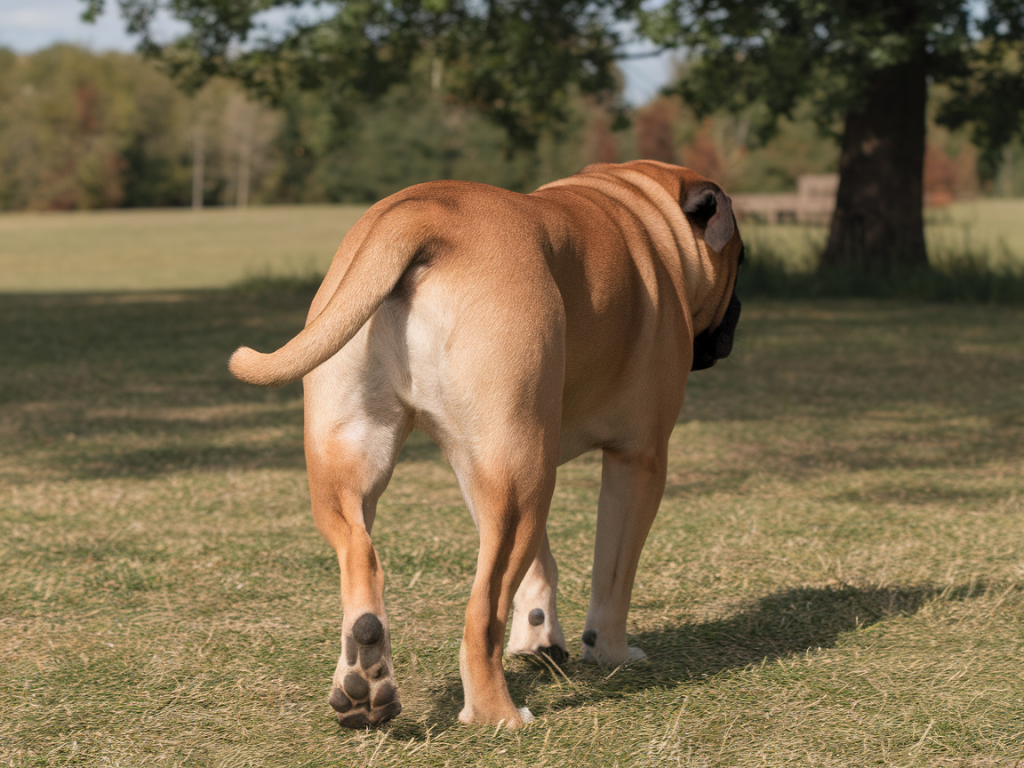
I often find that the earliest signs of trouble in a Bullmastiff's rear gait are subtle — a tiny hitch, a slight unevenness in stride length, or a small reluctance to jump into the car. Because Bullmastiffs carry so much mass over a compact frame, these small asymmetries can quickly progress to lameness or chronic pain if ignored. Over years of breeding, training and rehabilitating dogs, I’ve learned to trust a combination of careful at-home checks, video observation and timely veterinary assessment. Below I share the practical steps I use to spot and correct rear gait asymmetry early, what to watch for during daily handling, simple exercises and when to involve a specialist.
Why subtle rear gait asymmetry matters in Bullmastiffs
Bullmastiffs are powerful but not immune to joint, soft tissue and neurological problems. A small asymmetry may indicate:
early joint discomfort (hip or stifle)muscle imbalance or tightness in the hamstrings/glutealslow-grade cruciate (ACL) strainlumbosacral soreness or nerve irritationpast injury compensationBecause these dogs are heavy, even a mild and chronic favoring of one leg increases stress on the opposite limb, the spine and the supporting musculature. Catching it early lets us use conservative measures — rest, physiotherapy, targeted strengthening and anti-inflammatories — rather than surgical fixes down the line.
Daily at-home checks you can do in five minutes
Make these a habit — I perform them every few days when raising pups and every week for adult dogs. I do them after a calm period, not immediately after exercise.
Visual stand check: Have your dog stand square on a flat surface. Look from behind and from the side. Check for hips that sit higher on one side, uneven weight distribution or a toeing out/in on one hind paw.Back-sweep test: Gently run your hands down the back and across the pelvis. Does one side feel tighter or more reluctant to relax? Dogs often show tension on the side they’re favoring.Walk and trot video: Record a straight-line walk and a trot on a hard surface for 10–15 seconds each direction. Play back in slow motion. Look for a shorter stride, paw scuffing, or a delayed footfall on one hind leg.Hike the stairs: Observe ascending and descending stairs separately. Dogs with hind discomfort often go up more willingly than down, or they may bunny-hop upstairs using both hind legs together.Sit-to-stand and rise: Watch how smoothly they get up from a sit or down from a laying position. Difficulty pushing up evenly through both hind limbs is a red flag.What specific signs I watch for on video
Video is the single most helpful tool in my toolkit. I use my phone on slow motion (iPhone or Android) and watch frame-by-frame. Key red flags:
stride length discrepancy between left and right hind legsone hind foot dragging or landing toe-firsthip hike — a noticeable upward shift when the opposite leg pushes offshortening of stance phase on one limb (dog spends less time bearing weight)asymmetric tail carriage during gaitIf you see any of these, label the clip with date/time and continue to record periodic clips; small changes over a week can confirm progression.
Simple at-home corrections and management
Before jumping to medication or diagnostics, I try conservative steps for 1–2 weeks while monitoring closely:
Controlled rest: Reduce off-leash running and high-impact play. Short leash walks for toilet and light exercise only.Ice and heat: Use a cold pack for 10 minutes after any activity for the first 48–72 hours if there's acute soreness, then switch to a warm compress before gentle massage.Low-impact strengthening: Gentle rear-leg lifts, sit-to-stands and slow uphill walks build supportive musculature. Keep sessions short and gradual — 3–5 reps, several times a day.Weight management: If your Bullmastiff is even slightly overweight, losing 5–10% of bodyweight can dramatically reduce hindlimb load. I recommend a vet-approved calorie plan or products like Royal Canin Satiety if needed.Targeted massage and stretching: Gentle hamstring and gluteal stretches, and myofascial release along the hips. I often use a simple foam roller for the owner to apply gentle pressure (not deep tissue) while the dog is calm.Joint supplements: I use a combination of omega-3 fish oil and chondroitin/glucosamine (brands like Cosequin or GlycoFlex) as an adjunct. They’re not immediate fixes but can support joint health over months.When to contact your vet
If conservative measures don’t lead to measurable improvement in 7–14 days, or if you notice any of the following, book a vet appointment promptly:
clear worsening of gait or visible lamenessobvious pain when you palpate the hip, stifle or spinereluctance to bear weight at all on a hind limbneurological signs: dragging toes, knuckling, or loss of coordinationsudden changes in temperament associated with movement (whining, snapping when touched)What the vet or specialist will likely do
Expect your vet to perform a thorough orthopedic and neurological exam, and to request imaging if indicated. Typical next steps:
radiographs (x-rays) of hips, stifles and lumbar spineorthopedic tests (cranial drawer for cruciate, manipulation for hip laxity)ultrasound for soft tissue if suspecting muscle/tendon injuryreferral to a canine physio, orthopedist or neurologist if findings are ambiguousWorking with a canine physiotherapist or rehab specialist
Rehab professionals are lifesavers for correcting asymmetry. In my experience they’ll:
perform gait analysis and muscle testingcreate a progressive strengthening and flexibility programuse modalities like therapeutic ultrasound, TENS, or underwater treadmill (Hydrotherapy is excellent for Bullmastiffs — builds strength without impact)advise on long-term management including supplements, home exercises and activity modulationPreventing recurrence
Once you’ve corrected an asymmetry, maintain a routine that supports hindlimb health:
regular controlled conditioning: hill work, controlled sprint intervals, core strength exerciseskeep weight ideal — monitor with rib and waist checksregular physiotherapy check-ins for working/show dogs or those with past issuesuse ramps or steps to avoid repeated jumping into cars — or a lifting harness if neededWhen we catch these issues early and act with a combination of observation, conservative care and professional help, Bullmastiffs often return to full function without invasive intervention. If you’ve noticed a tiny hitch in your dog’s step, don’t wait — record it, try the simple checks above and get veterinary advice if it doesn’t improve quickly. I’m always happy to review videos or hear your experiences — small details often make the difference.