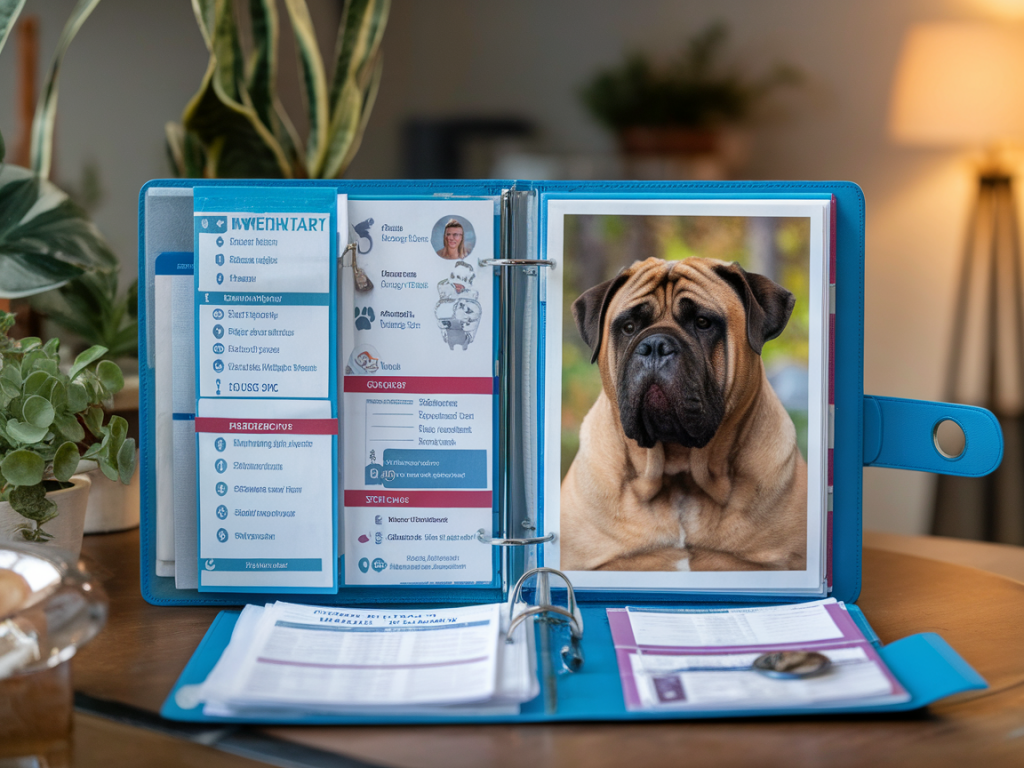
When an emergency happens with one of my Bullmastiffs, there’s no time to rummage through drawers or guess at medication names. Over the years I learned that a well-prepared veterinary emergency binder is one of the simplest things you can create that actually saves time, lowers anxiety and improves the care your dog receives. Below I’ll share exactly what I put in my binders, how I organize them, and how I use both physical and digital versions so you’re ready when every second counts.
Why a veterinary emergency binder matters
Bullmastiffs are big, powerful dogs and their emergencies can be dramatic — bloat, trauma, sudden lameness or allergic reactions. In a crisis, vets need quick access to your dog’s medical history, current meds and any known sensitivities. I’ve been to emergency clinics where a clear, concise folder cut the intake time in half and helped vets make faster decisions.
Having the binder also reduces stress for you. When you can hand over a single packet with everything the clinic needs, you can focus on the dog instead of filling out forms or trying to remember dates and dosages.
Core sections to include
Keep the binder simple and logically divided. I use a sturdy A4 ring-binder with clear plastic sleeves for each document type. Sections I always include are:
- Emergency contact list: Your name, phone, alternate contact, your regular vet’s number, emergency after-hours clinic(s), and your dog’s microchip provider and ID number.
- Medical summary sheet: A one-page snapshot with the dog’s name, breed, age, weight, known allergies, chronic conditions, and current medications with dosages and administration times.
- Vaccination and preventative records: Dates of rabies, distemper, leptospirosis, kennel cough, and flea/tick/heartworm treatments.
- Recent lab work and imaging: Bloodwork, urinalysis, X-rays or ultrasound reports from the past 12–24 months or anything relevant to current problems.
- Medication list and prescriptions: Current meds, dosage schedules, and any prescription details. Also note common over-the-counter meds vets have authorized before (e.g., NSAID names to avoid).
- Allergies and sensitivities: Drug allergies, food sensitivities, and any previous adverse reactions to vaccines or sedatives.
- Surgical history: Dates and short notes about past surgeries, complications, or anesthesia reactions.
- Insurance and payment details: Policy number, insurer contact, and the name of the policyholder. If you carry a credit card or authorization form, include that copy too.
- Behavior/husbandry notes: Bite history, stress triggers (e.g., loud noises), the best way to handle the dog, and calming strategies that work—important if your Bullmastiff is nervous in clinic settings.
- Photos: One recent full-body and one close-up face photo; helpful for identification and injury comparison.
Quick-reference table (for the clinic)
| Item | Detail |
|---|---|
| Dog’s name | Shadowguard Titan |
| Breed / Age / Weight | Bullmastiff / 4 years / 47 kg |
| Allergies | Penicillin (hives) |
| Current meds | Carprofen 75 mg — one tablet daily |
| Primary vet | Greenfield Veterinary Clinic — 020 7123 4567 |
| Microchip | 123456789 — Petlog |
Physical vs digital: both are useful
I keep both a physical binder in a predictable place at home and a digital copy accessible on my phone. The physical binder is what I hand to clinic staff; the digital copy is invaluable if the binder is damaged, left at home or if you’re traveling. For digital storage I use:
- Google Drive for scanned PDFs (easy to share by link).
- Dropbox as a backup synchronized across devices.
- Photos stored on my phone in an album labelled with the dog’s name and “medical”.
Scan documents using apps like Adobe Scan or CamScanner. For quick access, save a PDF named “DogName_EMERGENCY” and pin it to the top of the relevant cloud folder or your phone’s home screen.
How to use the binder during an emergency
When you arrive at the clinic hand over the binder and point to the quick-reference sheet. If the dog is conscious, bring the dog’s behavior notes forward—telling staff “avoid muzzle, uses towel method” is better than a long explanation. If multiple people are present, designate one person to be the document-handler so staff can work directly with them.
If you can, have a short, rehearsed summary ready: dog’s name, what happened (symptoms and time), key meds, and allergies. Vets appreciate concise info in urgency.
Keeping the binder up to date
I review and update my binders every three months or after any vet visit. Replace lab reports or add new imaging in clear sleeves. Remove outdated vaccine certificates if you have new ones. For medications, cross off discontinued drugs and add new doses. I also mark the review date on the front page with a sticker—small habit, big payoff.
Emergency kit add-ons and recommended products
Consider attaching a small pouch to your binder or keeping it nearby with these items:
- Printed photocopies of your dog’s ID and microchip information.
- Soft muzzle or basket muzzle (e.g., from Trixie or Snauzer), plus instructions on how to fit it.
- Thin blanket or towel (useful for lifting or calming).
- Saline eye wash and a basic first-aid spray (avoid human meds unless advised by a vet).
- Emergency contact card for your phone with one-tap dial (I use the ICE app feature).
Products I’ve found durable: an Oxford A4 ring binder, clear polypropylene sleeves, and a waterproof folder for travelling. For digital convenience, I like Evernote for notes and Google Drive for full documents—the sync is reliable and easy to share from my phone.
Travel and multi-dog households
If you travel with your Bullmastiff, make a travel copy: laminated summary sheet plus scanned documents stored in a dedicated cloud folder. For multi-dog homes, keep one binder with dividers for each dog and a matching visible label on your front door or fridge that indicates where the binder is located. In a real emergency, you don’t want to sort through multiple folders under stress.
Finally, teach family members or caretakers where the binder lives and how to use it. I’ve had sitters who knew exactly what to do because we did a quick run-through before they stayed with the dogs.