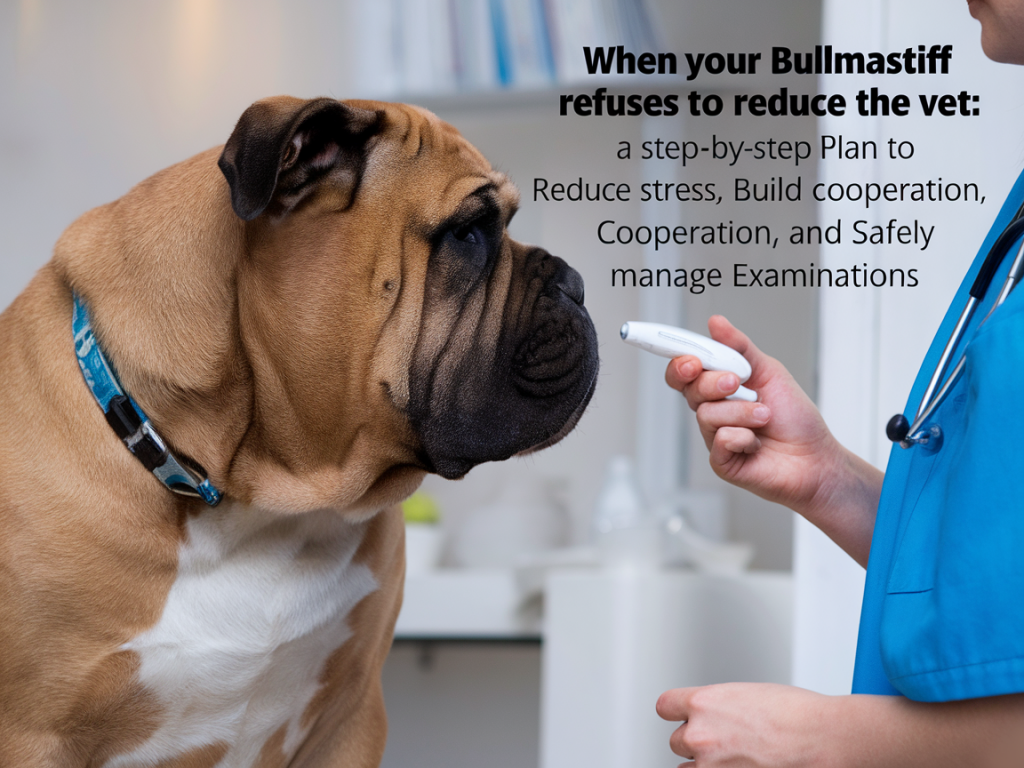
I’ve had Bullmastiffs who would happily cuddle a stranger and others who would freeze, tremble, or snap when the vet clinic door opened. When a Bullmastiff refuses the vet it’s stressful for everyone — the dog, the owner and the veterinary team. Over the years working with multiple generations of Bullmastiffs, and in rescue cases where fear was deep-rooted, I’ve developed a practical, step-by-step plan that reduces stress, builds cooperation and keeps examinations safe. Below I share what I do, what I’ve learned from veterinarians and behaviorists, and the specific tools and techniques that work for large, powerful dogs like ours.
Why a Bullmastiff might refuse the vet
Before we can fix the problem, we need to understand it. In my experience, refusals usually come from one or a combination of these causes:
When I evaluate a dog refusing the vet, I try to determine which of these are present. That guides whether we focus on pain relief, desensitization, counter-conditioning or a combination.
Step-by-step plan to reduce stress and build cooperation
This is the plan I use, organized into short-term safety measures and longer-term training and desensitization. I recommend discussing any plan with your veterinarian so we can work together safely.
If your Bullmastiff is actively refusing and may bite, safety first:
Before your next clinic visit, I spend time teaching the dog that touch = good. Start with short sessions where you calmly touch parts that are often handled at the vet:
Work in 30–60 second bursts, pairing each touch with high-value treats (small pieces of cooked chicken or cheese). If the dog pulls away, stop and try again more gently. The goal is to build tolerance — not force compliance.
Desensitization and counter-conditioning
Desensitization is gradual exposure to the stimuli that trigger fear (clinic smells, carrier, car ride), while counter-conditioning associates those stimuli with something positive.
I schedule “meet and greet” visits to the clinic where we don’t do anything medical. We walk in calmly, get a treat, sit in the waiting area for a minute, leave. The technician may give a calm, friendly fuss or offer a high-value treat. Repeating these visits helps a dog re-learn that the clinic can be safe.
Break the exam into small steps and only progress when the dog is comfortable: approach → touch collar → lift a paw → look in ear → brief auscultation. Reward every calm behavior. If progress stalls, step back and reward at a lower level.
Handling tools and equipment I recommend
| Item | Purpose |
| Front-clip harness | Better control, reduces pulling while minimizing neck pressure |
| Basket muzzle (Baskerville) | Safe short-term handling; introduce with treats first |
| High-value treats (boiled chicken, cheese) | Counter-conditioning rewards |
| Adaptil/Comfort Zone pheromone | Clinic/transport calming aid (works for some dogs) |
| Thundershirt | Body compression can reduce anxiety during transport or brief visits |
Working with your veterinarian and team
Open communication with your vet is essential. Tell them exactly how your dog behaves and what you’ve tried. Ask these questions:
I’ve found that clinics familiar with behaviorally-challenged dogs will schedule at quieter times, use low-stress handling techniques, and take the time to reward and build trust. If your clinic doesn’t offer this, ask if they can refer you to someone who does.
Medication and supplements — when they help
Sometimes behavior change won’t happen fast enough without pharmacological support. For severe anxiety I consult my vet about:
Medication isn’t a fix-all — it buys time and reduces suffering while we do training. Always use under veterinary guidance.
Transport and waiting room tips
Transport is often the first trigger. I reduce stress by doing this:
When progress is slow: rescue cases and trauma
In rescue dogs I’ve worked with, fear can be deeply ingrained. Healing takes months. I prioritize:
For these dogs I often work with a certified behaviorist and the vet to create a long-term plan that may include desensitization, medication and environmental enrichment.
Practical routine for weekly practice
Here’s a simple routine I use at home to keep a Bullmastiff comfortable with handling:
These consistent, short practices pay off. Bullmastiffs are intelligent and bond strongly with people. With patience and the right approach, even a dog who once refused the vet can learn to tolerate, and sometimes even enjoy, routine care. If you want, tell me what your dog does in the clinic and I’ll suggest specific next steps tailored to your situation.