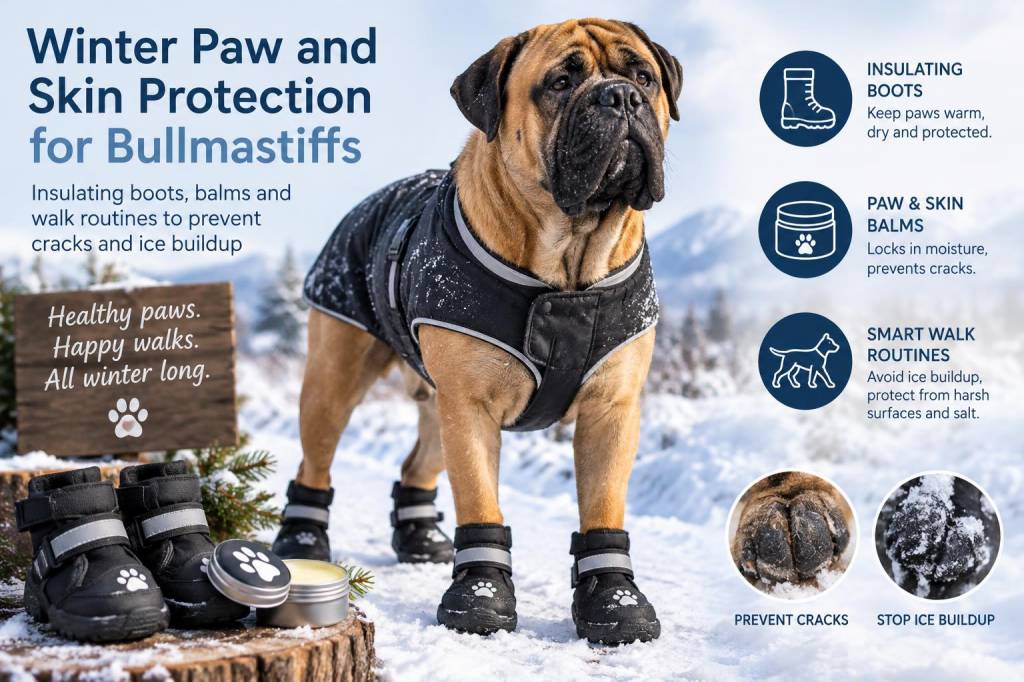
Winter changes everything about how I care for my Bullmastiffs' paws and skin. Their short coats mean they tolerate cold differently than some breeds, but their paws are always vulnerable to the elements — ice balls, de-icing salts, cracked pads and cold-related discomfort are all too common. Over the years I've learned practical routines and found products that truly help. Below I share what I do before, during and after winter walks: insulating boots that actually work for a Bullmastiff's wide paw, balms I trust, and walk routines that prevent ice buildup and pad cracks.
Why winter paw care matters for Bullmastiffs
Bullmastiffs have big, heavy bodies and wide paws. That puts extra pressure on pads and makes any crack or ice ball more painful. On top of that, many owners don't realise how the combination of cold, dry air and road salts can strip pads of natural oils, leaving them prone to splits and soreness.
Upfront care avoids painful vet visits and long recoveries. A little prevention—fitting boots properly, using a good balm, and changing walking habits—goes a long way.
Choosing insulating boots: what works for my dogs
Boots are the single best protection against ice and chemical salts, but only if they're the right type and fit. Bullmastiffs need boots with a wide toe box, secure closures and a tough sole. Here’s what I look for and recommend:
- Wide, flexible toe box: Their toes need space to spread for stability. Narrow boots cause chafing and refusal to walk.
- Adjustable straps or drawcords: Quick hook-and-loop plus a secondary strap keeps boots from sliding off during vigorous walks.
- Durable sole: Thick rubber or Vibram-type soles that resist puncture and offer grip on ice.
- Insulation without bulk: Fleece lining or thin thermal layers keep paws warm without making the boot too heavy.
- Water resistance: Seams and materials that resist slush and salt.
Brands I’ve used successfully on Bullmastiffs: Ruffwear Polar Trex for deep winter hikes (the tread and insulation are excellent), Muttluks for very cold days and city walks where you need flexibility, and Ultra Paws rubber boots for short slippery walks. Each has pros and cons; Ruffwear is sturdy but pricier, Muttluks are warm and comfortable, Ultra Paws are great for quick protection but less insulating.
How I train a Bullmastiff to accept boots
Most Bullmastiffs aren’t thrilled with boots at first. My training approach is simple and positive:
- Introduce boots as toys—let them sniff, nudge and step into them with the boot open.
- Reward any interaction with high-value treats. I use tiny bits of cooked chicken or soft training treats.
- Put one boot on a paw for a few seconds, praise, treat and remove. Repeat on all paws across short sessions.
- Progress to having them wear all four boots inside for a minute, then two minutes, gradually increasing time.
- Do short supervised walks indoors, then outside in the yard, then on the street.
Patience is key. Bullmastiffs learn fast when the outcome is positive and consistent.
Balms and moisturisers I trust
Boots protect from external hazards, but balms protect pads from drying, cracking and the irritants in salt. My go-to is Musher's Secret for regular maintenance; it creates a waxy barrier that repels snow and salt without being greasy. For deep cracks or very dry pads I use a thicker veterinary-grade paw balm such as O'Keeffe's Working Hands (pet-safe alternative) or a lanolin-based balm. Apply it like this:
- Clean the paws with lukewarm water to remove salt and dirt.
- Dry thoroughly between toes and pads.
- Apply a thin layer of balm to all pads and between toes where skin can crack.
- Massage in gently so it reaches cracks. Excess can be blotted away.
If your dog licks the balm obsessively, try distracting them for ten minutes with a toy or a treat puzzle; some balms are safe if licked in small amounts, others are best kept on for a while before licking resumes.
Walk routines that prevent ice buildup and salt exposure
My winter walks change depending on conditions. Here are the routines I follow:
- Pre-walk: Inspect paws for foreign objects, apply balm if it’s very dry and a short walk is planned, or pull on boots for longer outings.
- Choose surfaces: Prefer paths with packed snow over salted pavements when possible. Grass is often kinder than grit-covered tarmac.
- Shorten stride: Encourage a steady, calm pace rather than long, bounding strides which can fling ice between toes and pack snow into pads.
- Frequent checks: On longer walks I pause every 10–15 minutes to check for snowballs or salt accumulation. If snow cakes between toes, remove it promptly.
- Post-walk rinse: Rinse paws with lukewarm water after walks in salted areas, dry thoroughly, then apply balm or let the paws air-dry with supervision.
How to remove ice balls safely
Ice balls form between toes and under the fur-less areas of the foot. I avoid cutting them out with tools unless absolutely necessary. My method:
- Warm water soak: a shallow bowl of lukewarm water softens and loosens the ice for safe removal.
- Gently massage the snow/ice out with gloved hands.
- If boots are used, check the fit and shorten time outdoors to prevent reformation.
When de-icing salts become a problem
De-icing chemicals can burn pads and irritate skin. Signs to watch for: limping, redness, licking at paws, white powder on fur between toes or around nails. My precautions:
- Avoid heavily salted areas — choose side streets, parks or grassy verges.
- Rinse paws after walks or use pet-safe paw wipes to remove crystals quickly.
- Consider using boots on sidewalks where salt is applied.
Nail and fur management around paws
Keeping nails trimmed reduces pressure on pads and helps distribute weight evenly—important for large breeds. Trim nails regularly and keep the hair between pads trimmed to reduce snow packing. I use a coarse file or grinder for big dogs who dislike clippers and always work gradually with treats.
Diet, supplements and skin health
External care matters, but internal nutrition affects pad resilience. I make sure my dogs get:
- A balanced diet rich in omega-3 fatty acids to support skin elasticity.
- Fresh water—dehydration can make skin dry and prone to cracking.
- Supplements such as fish oil if their coat or skin looks dry (after checking with your vet).
When to call the vet
If a pad is deeply split, bleeding, unusually red, or if your Bullmastiff is lame for more than a day despite home care, see your veterinarian. Infected cracks may need topical antibiotics, bandaging, or even surgery in severe cases.
| Product | Use | Notes |
|---|---|---|
| Ruffwear Polar Trex | Insulated boot for long winter hikes | Great tread and insulation; pricier but durable |
| Muttluks | Warm boots for cold days | Comfortable for wide paws; good for deep snow |
| Ultra Paws | Rubber boot for quick protection | Good for slush and salt; less insulating |
| Musher's Secret | Paw wax barrier | Non-greasy, repels snow and salt |
| Veterinary paw balm (lanolin-based) | Treat dry, cracked pads | Use for deeper cracks and follow vet advice |
If you’re based in the UK and want more specifics, check out Shadowguard Bullmastiffs at https://www.shadowguardbullmastiffs.co.uk where I post seasonal gear reviews and step-by-step videos for boot training. Winter paw care takes some effort up front, but once you have a routine and the right kit, your Bullmastiff will happily enjoy the season without sore paws.