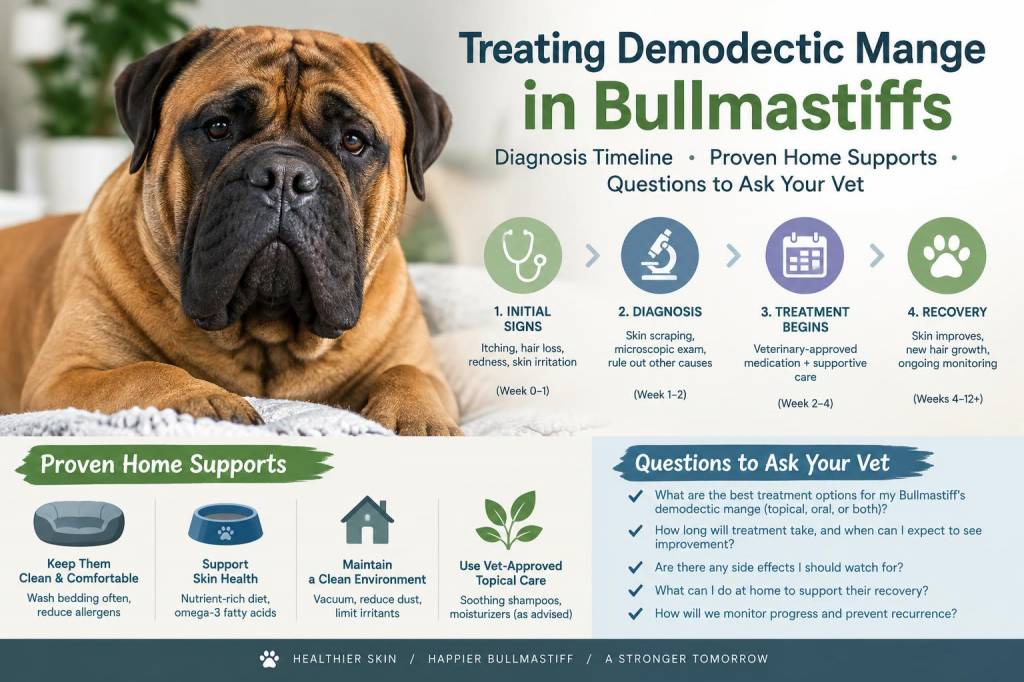
I remember the first time I discovered demodectic mange on a Shadowguard pup — a patch of thinning fur and a worried owner who’d Googled themselves into a panic. Over the years I’ve seen it present quietly in young dogs and flare up painfully in adults recovering from stress or illness. In Bullmastiffs, with their dense skin folds and sensitive temperament, demodectic mange (caused by Demodex mites) needs a careful, informed approach. Below I share how I diagnose it, the realistic timeline you can expect, home supports that actually make a difference, and the key questions I always ask the vet.
What demodectic mange looks like in Bullmastiffs
Demodex mites are normal residents of canine skin in tiny numbers. Problems arise when the mite population explodes because of immune imbalance. In bullmastiffs I most commonly see:
Because our breed has deep facial wrinkles and short coat, small lesions can hide. I encourage owners to check skin weekly and bring any suspicious patch to the vet sooner rather than later.
Diagnosis — what to expect and how long it takes
When I take a dog to the clinic, I follow a simple protocol so neither I nor the owner gets false reassurance.
Timeline for diagnosis: skin scraping and cytology results are usually available same day. If scraping is negative but suspicion remains, vets may repeat scrapes over 2–4 weeks or perform a biopsy. In young dogs with localized demodex, diagnosis and start of treatment can be same visit; generalized cases often require further work-up (bloods, ruling out underlying disease) before a long-term plan.
Treatment timeline — realistic expectations
Treating demodectic mange is rarely overnight. Here’s the rough timeline I share with owners:
| Phase | Typical duration | What to expect |
|---|---|---|
| Initial diagnosis and start | 0–2 weeks | Topical shampoos or spot-on, start oral therapy if recommended; treat secondary infections |
| Active mite reduction | 4–12 weeks | Visible improvement in skin and hair growth; repeat skin scrapes to confirm reduction |
| Confirmation of negative mites | At least two negative scrapes 4–6 weeks apart | Only then consider stopping systemic therapy |
| Recovery and regrowth | 2–6 months | Coat thickens, pigmentation normalizes; ongoing skin care to prevent relapse |
Generalized demodicosis often needs sustained treatment for several months. Localized juvenile demodex can resolve spontaneously, but I still monitor closely to prevent complications.
Proven home supports that complement veterinary care
Pharmaceutical therapy does the heavy lifting, but what we do at home matters. Here’s what I use and recommend in my kennels and with adopters.
Medications to know (and safety notes)
Names you may hear at the clinic:
My rule: never give systemic medication without veterinary guidance, and always confirm MDR1 status for Bullmastiffs before certain drugs are considered.
Questions to ask your vet
Take this list to your appointment — I use it myself when discussing cases:
When I’ve helped adopters through a case, the most common regret they’ve expressed is waiting too long to ask these questions. Clear communication sets expectations and reduces stress for dog and owner.
Fighting demodectic mange in Bullmastiffs is rarely a one-size-fits-all process. With patient diagnostics, safe and effective veterinary treatment, and consistent, supportive home care, most dogs make a complete recovery. If you’re facing this with your dog, keep notes, take photos to document progress, and reach out to your vet early — and if you want, share the story with me on Shadowguard; I read every one and often have practical tips from our rescue work that might help.