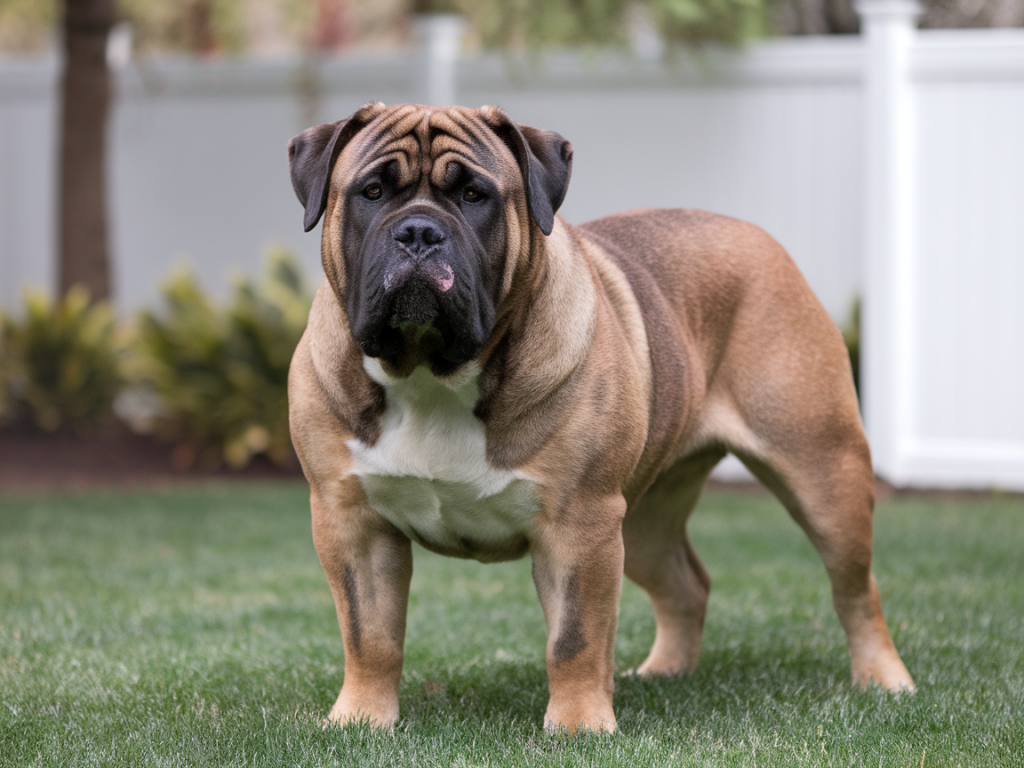
Bringing a new Bullmastiff into a home that already has cats and small dogs can be one of the most rewarding — and nerve-racking — experiences you’ll go through as an owner. Over the years I’ve introduced several of my own Bullmastiffs to multi-species households and to rescue dogs with varied histories, and I’ve learned that planning, patience and the right protocols make all the difference. Below is the step-by-step approach I use and recommend, based on hands-on experience, consultations with behaviorists and lots of trial and error.
Prepare the environment before arrival
Preparation starts before the Bullmastiff comes through the door. I set up safe zones, scent exchanges and manage expectations for the resident animals.
- Safe rooms: Choose a quiet room for your Bullmastiff with a bed, water, toys and pee pads if still being house-trained. Likewise, ensure your cats and small dogs have elevated or closed-off areas (cat trees, baby-gated rooms) they can retreat to without being approached.
- Barriers and equipment: Invest in a sturdy baby gate, a long lead (3–6 m), and a harness rather than a collar for better control. A crate that’s comfortable for the Mastiff can be a calm den. I like metal crates with dividers for larger breeds.
- Scent swapping: A few days before the meeting, swap bedding or rub a towel on each animal to transfer scents. Place those items in the other animals’ spaces so they get used to the newcomer’s smell.
- Supplies on hand: Treat pouch, high-value treats (freeze-dried liver, small cheese cubes), clicker if you use one, and calming aids if needed (Adaptil for dogs, Feliway for cats). I sometimes use DAP diffusers for the house during the first week.
First arrival: keep it low-key and controlled
The first hours set the tone. I bring the Bullmastiff in on-lead, calm and confident, never high-energy or overstimulated.
- Introduce one at a time: Don’t simultaneously present the Mastiff to all resident animals. Start with the calmest small dog or the most confident cat if possible.
- Neutral territory: If you can, do the initial meeting in a neutral room that isn’t the cat’s or resident dog’s primary territory. That reduces defensive reactions.
- Keep distance: Allow visual and scent exposure through a baby gate or long lead first. Observe body language closely: soft eyes, loose mouth, wagging tail (not stiff) are good. Hard stares, raised hackles, low growls or fixated stalking are warnings.
- Counter-condition: Every time the resident animal notices the Bullmastiff and remains calm, reward them with a treat. For the Bullmastiff, reward calm ignoring behaviour. Over time, both learn that calm presence equals rewards.
Leashed, controlled face-to-face meetings
When both parties seem comfortable with visual contact, I progress to short, leashed introductions. Keep sessions brief — 3 to 5 minutes initially.
- Short and sweet: Keep first close-up meetings under five minutes. End on a positive note while things are calm.
- Handler focus: Keep the Bullmastiff focused on you with treats and body language cues. Teach and use the “watch me” or “look” cue so the Mastiff looks to you instead of fixating on the cat or small dog.
- Reward calm: Both the Bullmastiff and the resident animals should be rewarded for relaxed behaviour. Use high-value treats to create a strong positive association.
- Have an escape route: Ensure cats and small dogs can move away. Elevated shelves, pet doors or gated rooms help them feel safe and in control.
Supervised, increasing freedom
Over days and weeks you’ll gradually increase unsupervised access, but only if specific criteria are met.
- Criteria to progress: No chasing, no growling, calm tolerance when pets are near each other, and the Mastiff responding to recall or “leave it” reliably.
- Short off-lead periods: In a secure room, allow very short off-lead interactions while you supervise closely. Be ready to interrupt any prey-driven chase with a sudden noise or a leash slip on.
- Scheduled separations: Continue to provide separate spaces for meals and rest. Never feed the Mastiff loose with cats or small dogs present until you are absolutely certain of no resource guarding.
- Rotate attention: Give individual attention to resident animals so they don’t develop jealousy. This is also an opportunity to reinforce their own training cues.
Training focus areas and tools
There are several behaviours I focus on early: impulse control, recall, “leave it”, and desensitisation to small animal movement.
- Impulse control: Practice “sit”, “down”, “wait” and reward calmness. Bullmastiffs thrive on structure and benefit hugely from impulse-control games (treat-on-nose, waiting for release cues).
- Recall and long line: Train recall on lead first, then on a long line. Reliable recall is essential in case the Mastiff becomes fixated on a cat or small dog.
- Desensitisation: Play recordings of cat meows or small dog barking at low volume while rewarding the Mastiff for calm behavior. Increase intensity slowly.
- Clicker or marker training: I use a clicker or a verbal marker (“yes”) to precisely mark desired behaviour. This speeds up learning and clarity for the dog.
Troubleshooting common issues
No introduction is perfect — here’s how I handle some common problems.
- Chasing instinct: Immediately interrupt with a recall or “leave it”. If chasing persists, return to earlier stages (visual-only exposure) and increase counter-conditioning. Consider using a head halter for extra control during training sessions.
- Growling or stiffness: Separate and regroup. Growling is communication; don’t punish the growl. Work with a behaviorist to identify triggers and build confidence in all animals.
- Resource guarding: Feed animals separately and remove high-value items when unsupervised. Teach the Mastiff “drop it” and trade games to reduce guarding tendencies.
- Stress signs in cats: Look for hiding, over-grooming, loss of appetite. Increase vertical space, provide pheromone diffusers and restore predictable routines for the cat.
Sample daily checklist
| Task | Why |
|---|---|
| Short supervised interaction (10–15 min) | Maintain positive associations |
| Separate meals | Prevent resource guarding |
| Individual play/training for each animal | Reduce jealousy; reinforce behaviours |
| Calm downtime in separate safe zones | Helps all animals decompress |
| Scent swapping (weekly) | Maintain familiarisation |
When to get professional help
If you see escalating aggression, repeated unmanageable chasing, severe anxiety in any animal, or if progress stagnates despite structured training, consult a certified force-free behaviorist. I’ve worked closely with vets and behaviorists like those certified by the International Association of Animal Behavior Consultants (IAABC) — they can create tailored plans and, if necessary, recommend medical checks for fear-related behaviours.
Introducing a Bullmastiff to cats and small dogs demands time, structure and respect for the resident animals’ needs. Take things at their pace, celebrate small wins, and prioritize safety. With consistent training and a calm, reward-based approach, most multi-species households can become harmonious and happy. If you’d like, I can share a printable checklist or a sample week-by-week plan tailored to your household—tell me the ages and histories of the animals and I’ll draft one.