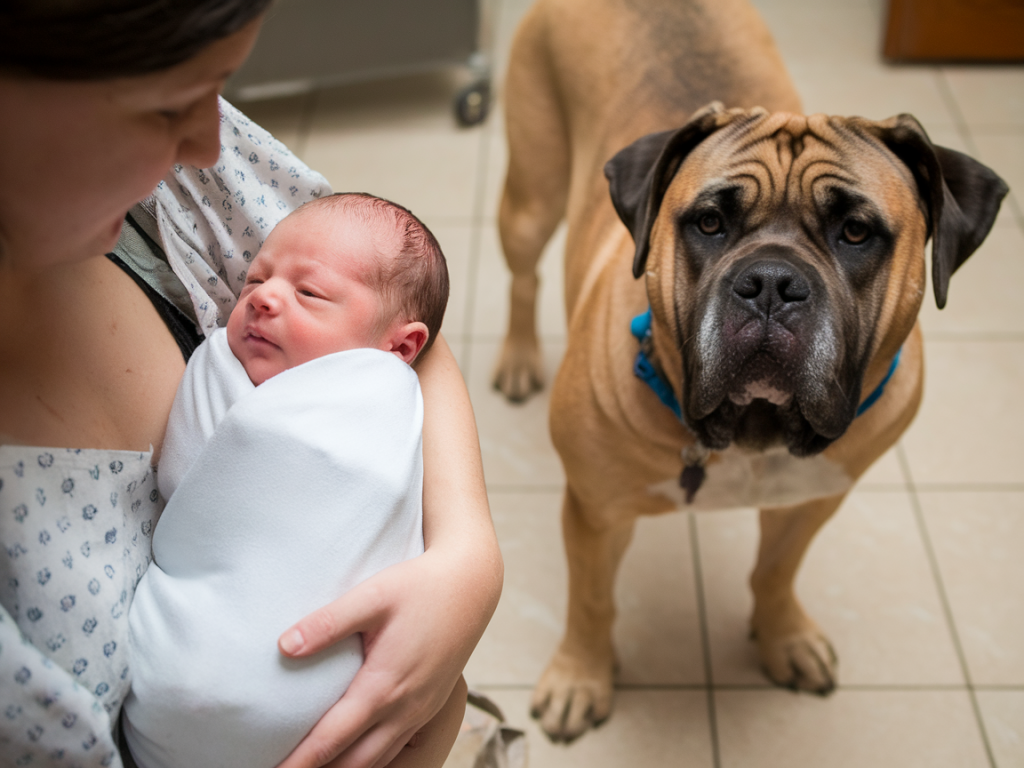
Bringing a newborn into a home with a Bullmastiff is one of those life events that fills you with awe and a fair bit of nervous energy. Over the years I’ve guided many families through this transition, and every time I’m reminded that preparation, calm leadership and realistic expectations make all the difference. Below I’ll walk you through step-by-step safety prep, how to carry out the first introductions, and practical routine adjustments that help both baby and dog thrive.
Before the baby arrives: prepare the environment
Start early. I aim to begin changes at least 4–6 weeks before the due date whenever possible — Bullmastiffs appreciate routine, and gradual shifts are easier on them than sudden upheaval.
- Set up safe zones: Create at least two dedicated dog-safe areas: one where your Bullmastiff can retreat undisturbed (a comfortable bed, crate or quiet room) and another where the dog will be allowed when supervised around the baby. I use a sturdy crate (not as punishment, but as a den) and a gated-off living area. Brands I trust for gates are Richell or Carlson for strength and reliability.
- Baby-proof the house for a large breed: Bullmastiffs are powerful — secure loose cords, protect diaper-bag contents, and ensure any changing table or low furniture can’t be bumped by a curious head. Anchoring tall furniture is key.
- Scent and sound introduction: Bring home a small blanket from the hospital (if possible) or have family members take a blanket to the hospital to be wrapped around the baby. Let your dog smell it at home before meeting the newborn. Also, begin playing recordings of baby noises at low volume and gradually increase to help desensitize the dog to crying and gurgling.
- Vet check and health: Schedule a vet visit to confirm vaccinations and that there are no health concerns. Discuss parasite control — fleas and intestinal worms are an infection risk around infants.
- Training refresh: Reinforce basic cues: sit, down, stay, place and gentle. “Place” (a mat or bed where the dog goes on cue) is a lifesaver for controlled interactions.
First introductions: calm, controlled and short
The first meeting matters. Keep it slow, staged and always under your management.
- Choose who meets the dog first: Ideally, one adult (not the new mum if she’s immediately exhausted) should introduce the baby. The dog should be calm, on a leash, and wearing a harness rather than just a flat collar for better control.
- Make it positive: I ask the dog to sit or go to “place” while I bring the baby into the room in a car seat or bassinet (never hand the newborn to someone standing while the dog is overstimulated). Give calm praise and high-value treats (small pieces of cooked chicken) when the dog is calm and non-reactive.
- Let the dog sniff at distance: Allow the dog to sniff the edge of the bassinet or the blanket with the baby’s scent, but do not force a nose-to-face interaction. Keep sessions short — a minute or two — and end on a calm note with a reward.
- Watch body language: Look for soft eyes, relaxed mouth, and normal tail carriage. Stiffness, fixed stare, whale eyes, raised hackles or intense sniffing are signs to step back and slow down.
Practical routine adjustments
Baby life rearranges everything. Here’s how I adapt a Bullmastiff’s routine to keep them content and well-behaved.
- Exercise first: A tired Bullmastiff is a calmer companion. Increase physical exercise and mental work before major caregiving periods (naps, night feeds). A 30–45 minute walk or play session earlier in the day helps.
- Maintain feeding schedule: Try to keep meal times consistent. If you’ll be out or distracted more than usual, consider timed feeders or having a trusted person drop in. Sudden changes to food timing can increase stress behaviors.
- Short training sessions: Use nap times for 5–10 minute training bursts to reinforce calm behaviors. Teach or reinforce a “gentle” cue — I reward gentle mouthing behaviors with soft biscuits and immediately stop attention if the dog’s greeting becomes too boisterous.
- Use baby gates wisely: Gates let the dog see the baby and family without direct access. A gate near the nursery doorway allows supervised introduction while preventing unwanted approaches during busy moments like diaper changes.
Sleeping and night-time management
Night-time is when routine is most fragile. Decide your plan ahead of time and be consistent.
- Separate sleeping spaces: I don’t recommend dogs sleeping in the baby’s room for safety and sleep quality reasons. The Bullmastiff should have a cozy bed outside the nursery — this reduces accidental rolling or smothering risk and helps the family get uninterrupted rest.
- White noise: White noise machines help both baby and dog settle. It masks sudden household sounds that could cause startle or anxiety.
- Night-time supervision: If the dog is unsettled at night, a family member can offer a short reassurance walk or brief calming cuddle in another room, then return the dog to its bed. Avoid reinforcing attention-seeking at night by rewarding calm behavior.
Managing jealousy, attention and stress
Bullmastiffs are loyal and can be very attached to their people. The arrival of a baby can trigger jealousy unless handled thoughtfully.
- Quality time: Schedule short one-on-one sessions with the dog daily — brushing, a cuddle on the couch, or a walk. Even 10 focused minutes helps.
- Feed from the baby’s schedule: Use feeding and treat times to build positive associations with baby sounds and objects. When the baby cries, give the dog a chew toy or long-lasting treat like a Kong to create calm co-occurrence.
- Professional help early: If you notice guarding, resource aggression, or marked behavioral changes, contact a certified force-free trainer or behaviorist early. Don’t wait for escalation.
Safety checklist (printable)
| Task | Completed |
|---|---|
| Vet check and parasite control | |
| Set up quiet retreat and gated supervised area | |
| Introduce baby scents and sounds gradually | |
| Refresh obedience (place, sit, stay, gentle) | |
| Secure hazardous items and anchor furniture | |
| Plan night-time sleeping arrangements |
Real-life example
I once worked with a family whose Bullmastiff, Max, was used to full access to the house and a lot of attention. When the baby came home, Max started hovering by the nursery doorway and became quite vocal. We implemented a “place” mat at the living-room window with high-value chews, reinforced separation with 10-minute calm sessions away from the baby, and slowly increased supervised visits near the bassinet. Within three weeks Max relaxed and began lying quietly just outside the nursery door — not glued to the baby but content to be nearby. The key was consistency, rewarding calm and giving Max clear alternatives to constant attention-seeking.
When to call a professional
If you see any of the following, consult a certified trainer or behaviorist immediately:
- Growling or snapping when the baby approaches or when you pick the baby up
- Intense guarding behavior around rooms, people or objects
- Marked change in appetite, elimination or self-harm (excessive licking or pacing)
Many behavior issues are preventable with planning and early intervention. I keep a list of trusted local behaviorists I recommend to families going through this change — if you’d like names in your area, I can share contacts through the site’s contact page.
Bringing a newborn into a home with a Bullmastiff can be a deeply rewarding experience. With thoughtful preparation, step-by-step introductions, steady routines and clear communication, your dog can become one of the safest and most loving protectors of your child. The process is gradual, and patience paired with proactive training will set the stage for a lifelong, respectful bond.