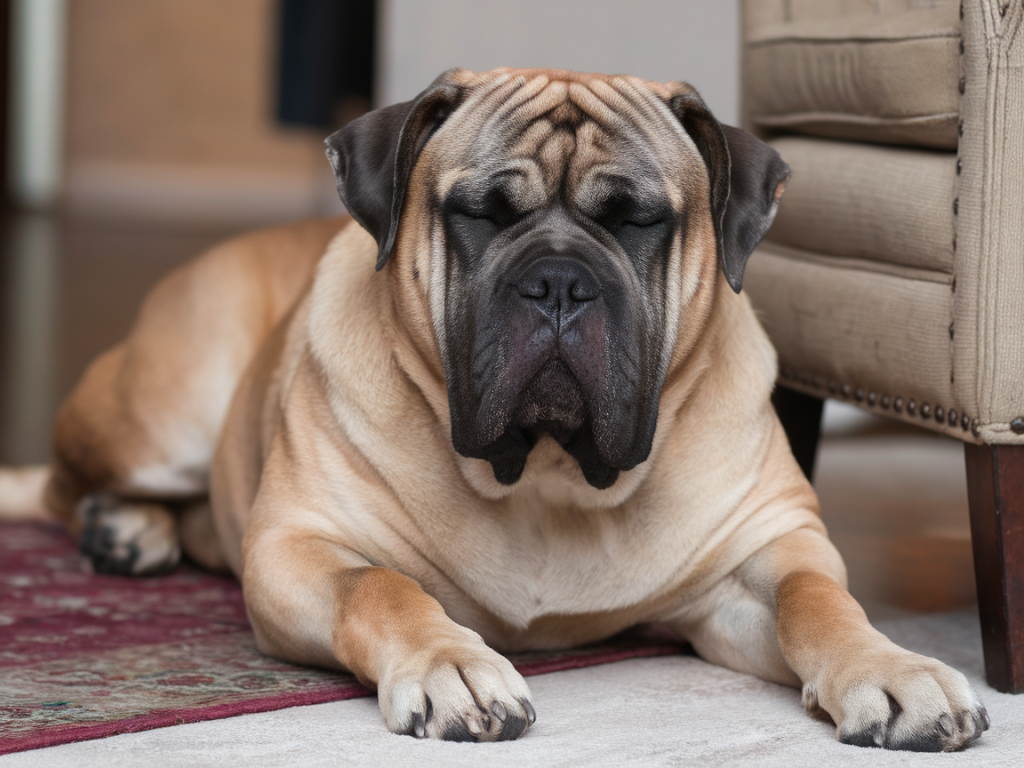
I spend a lot of time watching Bullmastiffs — in my kennel, at rescue, and in homes where I help new owners settle in. Over the years I’ve learned that understanding a Bullmastiff’s body language is one of the quickest ways to build trust and prevent problems. These dogs are powerful but emotionally transparent if you take the time to read them. Below I share the calm signals I look for, the stress signs that worry me, and practical steps I use to help dogs move from tense to relaxed. This isn’t theory — it’s what’s worked with litters, adults in training and rescued dogs recovering from trauma.
Why body language matters for Bullmastiffs
Bullmastiffs are descendants of guardians and estate dogs; they are naturally observant and sensitive to human cues. Because they’re large and sometimes stoic, owners can miss small signals that show anxiety or discomfort. Reading those early signs lets you intervene gently — often before a dog feels cornered or reactive. I aim for prevention: the earlier you notice, the less likely you’ll need forceful corrections or experience escalation.
Calm signals I commonly see
Calm signals are the little behaviors dogs use to communicate “I’m comfortable” or “I’m trying to keep things peaceful.” I pay close attention to these — they tell me when a dog is mentally balanced even if its physical environment is stimulating.
- Soft eyes: relaxed eyelids, slow blinking. A Bullmastiff’s gaze will look heavy but not intense.
- Loose mouth: tongue visible, lips relaxed, no hard line around the muzzle.
- Low, wagging tail: not high and stiff; the wag is broad and slow rather than rapid and tense.
- Yawning and lip licking: often used to self-soothe and to calm others — not always a sign of tiredness.
- Turning the head or body away: a deliberate, polite avoidance move when the dog wants less attention or less confrontation.
- Play bows and gentle play: front end lowered, rear up — a clear “friendly” invitation.
- Moving slowly: deliberate, unhurried movement is a sign of confidence and calm.
Stress signs — what I watch for early
Stress can escalate quickly in a large dog. In rescue work, I look for subtle early signs so I can change the situation before fear turns into aggression. These are the behaviours that make me stop and reassess immediately:
- Stiff body and frozen posture: sudden stillness, weight forward or leaning away — the dog is deciding whether to flee or engage.
- Hard eyes: direct, fixed stare with whites of the eyes visible (whale eye).
- Panting unrelated to heat or exercise: fast, shallow breaths when there’s no physical reason.
- Excessive lip licking or mouth smacking: when frequent and out of context, it’s a stress signal rather than a friendly lick.
- Pacing, whining, or repetitive behaviour: signs of internal arousal and inability to settle.
- Raised hackles and a tucked or high tail: raised hair can accompany fear or arousal; tail position gives context.
- Avoidance or cowering: trying to hide behind you or shrink away from people and other dogs.
Context matters: reading signals in pairs
A single gesture rarely tells the whole story. I always read body language in context — pairing signals and noting what happened immediately before. For example, a yawning dog after a walk is probably tired; a yawning dog when a stranger approaches could be trying to defuse tension. A wagging tail doesn’t always mean “happy”; a high, stiff wag with a hard gaze can mean arousal or potential aggression. Over time you’ll learn the baseline for your individual dog — what “normal” relaxation looks like — and that baseline is your best filter.
Practical steps when you see stress
When I see a stressed Bullmastiff, I follow a few simple rules that work reliably:
- Remove the trigger if possible: calmly create distance. A step back by you often gives the dog space to choose calm.
- Give them an out: don’t trap the dog in a corner. Open pathways and let them move away on their terms.
- Lower your own energy: speak softly, avoid direct eye contact, and use slow movements.
- Offer a predictable coping tool: a chew like a Kong filled with a favourite treat or a lick mat can redirect arousal into something positive.
- Use reward-based management: when the dog relaxes even slightly, reward immediately with a high-value treat or gentle praise to reinforce calm.
- Mark and retrain: once the dog has settled, work on short, low-stress training steps to rebuild confidence (sit, look at me, touch).
Tools and products I recommend
Some products can help when used thoughtfully:
- Calming chews or pheromone diffusers: I sometimes use Adaptil diffusers in the home for a new rescue — they can reduce background anxiety during the first few days.
- Long-lasting chews and food puzzles: Kong Classic or West Paw Zogoflex toys filled with kibble and a bit of wet food do wonders to slow arousal and give focus.
- Front-clip harness: for walks where the dog needs guidance without pressure on the neck. I often use a well-fitted front-clip harness for training loose-leash walking.
- Mat training: teaching a “go-to mat” gives the dog a predictable safe space. I use a firm mat or bed and train it with treats and calm releases.
Real-life examples from rescue work
I once took in a Bullmastiff named Margo who froze and showed whale eye whenever a new person entered the room. Early on, praise and direct greeting made her shut down. So I changed tactics: guests sat quietly and tossed treats away from themselves. I asked guests not to reach out; instead they dropped treats and sat still. Margo began to approach on her terms and started offering play bows. Over weeks we built up to short touch sessions, always stopping before any sign of freezing returned. That progression — distance, choice, reward — is the backbone of many successful rehabilitations I’ve done.
When to seek professional help
If a Bullmastiff consistently shows high levels of stress (frequent freezing, snapping, or progressive avoidance) it’s time to consult a professional. I work regularly with certified force-free trainers and veterinary behaviourists for cases where medical issues or deep fear are present. If you’re in the UK, look for an IAABC-certified trainer or a registered veterinary behaviourist via RCVS listings.
| Calm Signals | Stress Signs |
|---|---|
| Soft eyes, slow blink | Hard stare, whale eye |
| Loose mouth, gentle pant | Excessive panting, tight muzzle |
| Slow wag, relaxed movement | Stiff posture, pacing |
| Turning away, yawning | Repeated lip licking, cowering |
Reading a Bullmastiff is a rewarding skill — it deepens your relationship and keeps everyone safer. Watch, learn your dog’s baseline, act early and compassionately, and don’t hesitate to bring in a professional if behaviours escalate. Over time you’ll notice more calm moments and fewer flashpoints — and that’s the whole point of doing this work.