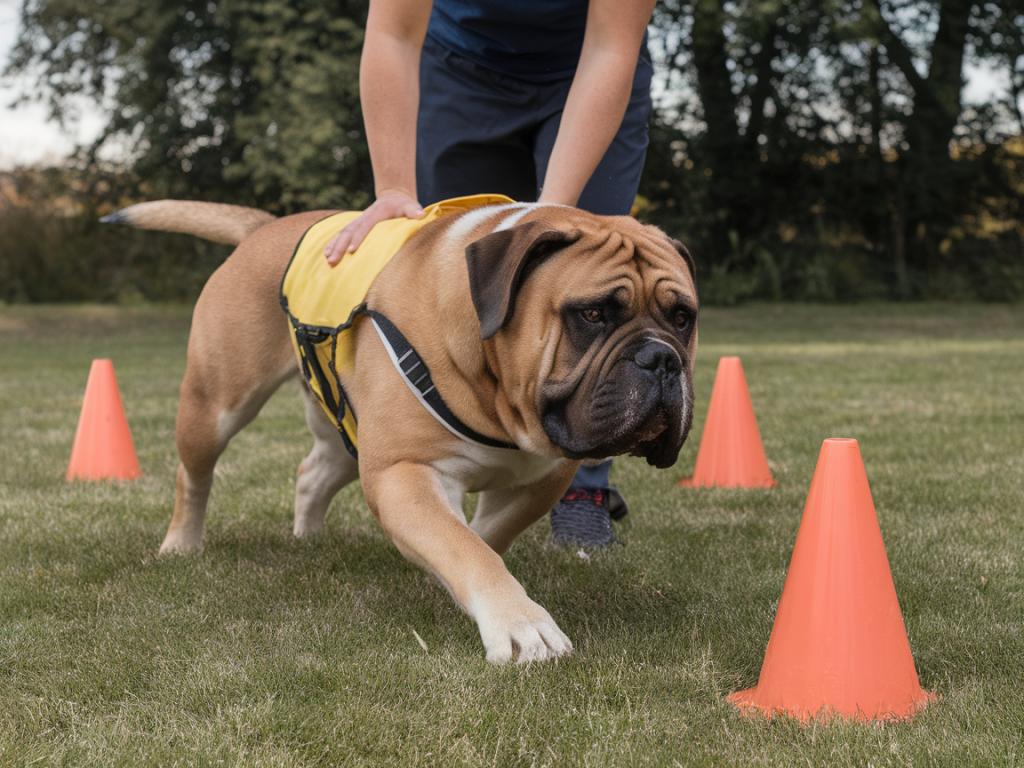
As a breeder and lifelong caretaker of Bullmastiffs, I’ve seen hips that move like well-oiled gates and hips that complain at the slightest provocation. Hip issues are common in our breed, and while genetics and veterinary care are central, a thoughtful program of safe stretching and physiotherapy exercises at home can make a real difference in comfort, mobility and long-term quality of life. Below I share practical routines I use with my dogs and rescue cases, plus the safety checks and red flags to watch for.

Why home stretching and physiotherapy matter for Bullmastiffs

Bullmastiffs are powerful, large-boned dogs with a tendency toward hip dysplasia, osteoarthritis and muscular tightness. Regular gentle stretching and targeted exercises help by:

  • maintaining joint range of motion;
  • strengthening the muscles that support the hip (gluteals, hamstrings, quadriceps);
  • reducing compensatory tension in the back and opposite limbs;
  • improving balance and proprioception, which lowers fall and injury risk.
  • This isn’t a replacement for veterinary or certified canine physiotherapist care—think of it as daily maintenance that complements professional treatment plans.

    Safety first: checks before you start

    Before beginning any routine:

  • Get a vet check. If your dog has recent limping, swelling, sudden pain, fever or neurological signs, see the vet immediately.
  • Work from a diagnosis. If your dog already has hip dysplasia or arthritis, ask your vet or a canine physio for guidelines tailored to severity.
  • Start slow. One to three minutes per exercise at first, watching for subtle changes in gait or attitude.
  • Use comfortable surfaces. Non-slip flooring, an exercise mat or padded rug helps Bullmastiffs feel secure. Avoid slippery tiles.
  • Watch body language. Lip licking, yawning, turning the head away, freezing or sudden vocalisation are signs the dog is stressed or in pain—stop and reassess.
  • Warm-up: the crucial first step

    Never stretch a cold dog. I begin every session with a 5–10 minute low-intensity warm-up to increase blood flow:

  • easy leash walk at a relaxed pace;
  • gentle incline walk (a small hill if available) to engage hind muscles;
  • play with a favourite toy for a minute—short bursts to encourage natural movement.
  • Warm muscles respond better to stretching and are less likely to be injured.

    Passive range-of-motion (PROM) exercises

    PROM is ideal for dogs that are stiff or in the early stages of arthritis. I perform these slowly and gently, never forcing a joint.

  • Hip flexion/extension: With the dog standing or lying on their side, support the hind limb at the stifle (knee) and hock. Move the hind leg forward (flexion) and then backward (extension) through a comfortable arc. 5–8 repetitions per leg.
  • Internal/external rotation: With the dog relaxed on their side, gently rotate the hind paw inward and outward—small, controlled movements. 5–6 repetitions per leg.
  • Keep all movements smooth and stop if there is resistance or pain. PROM is particularly useful after long rests or for older dogs who avoid moving.

    Active strengthening exercises

    These exercises build the muscle support around the hip and improve functional mobility. Start with 1–3 sets of 6–10 reps and increase gradually.

  • Sit-to-stand: From a sit, ask your dog to stand and then sit again calmly. This strengthens quadriceps and hip extensors. Use treats or a target to encourage correct positioning. For weak dogs, support the chest while they rise to reduce strain.
  • Step-ups (low platform): Use a low stable step (10–15 cm) or a sturdy bookshelf board. Have your dog place one hind paw up and then drive through the hind leg to complete the step. Alternate legs. Start low and only increase height if movement is controlled.
  • Rear-end awareness (targeting): Use a target stick or treat to ask your dog to move their hindquarters side-to-side or to touch a target positioned laterally. This helps engage gluteal muscles and improves coordination.
  • Balance and proprioception

    Improving balance reduces compensatory stress on the opposite limb and spine. I often use inexpensive equipment for these drills:

  • Balance disc or wobble cushion: Have the dog stand with two hind paws on the disc and front paws on the floor. Start with 5–10 second holds and increase time as confidence grows. This strengthens stabilising muscles.
  • Paw lifts on soft surface: On a thick bed or mat, ask the dog to lift one hind paw for a few seconds, then switch. Small holds build fine control.
  • Brands I’ve used: FitPAWS balance discs and inexpensive Amazon wobble cushions have held up well for my dogs. Always supervise and keep the disc low to the ground to prevent falls.

    Stretching techniques I trust

    Gentle static stretches help lengthen tight muscles. Aim for 10–20 seconds per stretch, 2–3 times per leg, and never force a stretch beyond comfort.

  • Hamstring stretch: With the dog standing, gently extend the hind limb backward with a slight downward pressure at the hock while supporting the joint. You should feel a light stretch along the back of the thigh.
  • Quadriceps stretch: With the dog standing, lift the hind paw toward the hip (like a human quad stretch) holding just below the hock for support. Keep the pelvis neutral.
  • Hip flexor stretch: With the dog lying on their side, extend the top hind limb slightly backward and hold gently to open the hip flexors.
  • How often and how long?

    I recommend daily short sessions for chronic management—10–15 minutes total. For dogs recovering from surgery or a flare-up, follow your vet/physio’s schedule, which might include multiple short sessions per day. Consistency beats intensity: small doses daily produce better outcomes than occasional long sessions.

    When to stop and seek professional help

    Stop the session and contact your vet or a certified canine physiotherapist if you see:

  • increased limping or new lameness after exercise;
  • marked reluctance to move, vocalisation or aggression when touched;
  • swelling, heat or redness around the joint;
  • rapid loss of muscle mass or decline in function despite regular home exercises.
  • Working with a qualified canine physio can provide tailored progressions (e.g., underwater treadmill, therapeutic laser, kinesiology taping) that are beyond home practice and often transformative.

    Tools and supplements I find useful

    Simple tools make sessions more effective and comfortable:

  • non-slip mat or yoga mat;
  • low platform step or sturdy box;
  • balance disc (FitPAWS or similar);
  • treat pouch and high-value treats for motivation;
  • supportive harness for lifts if you need to assist rising.
  • From a nutritional/support standpoint, I often discuss joint supplements with owners—glucosamine, chondroitin, and omega-3 (EPA/DHA) can complement physiotherapy. Choose reputable brands (e.g., GlycoFlex, VetriScience) and run supplements past your vet to ensure compatibility with any medications.

    If you’d like, I can share printable routines or short videos of these exercises from my own training sessions at Shadowguard. Practical routines help owners develop confidence and give Bullmastiffs the care they need to move more comfortably, longer.