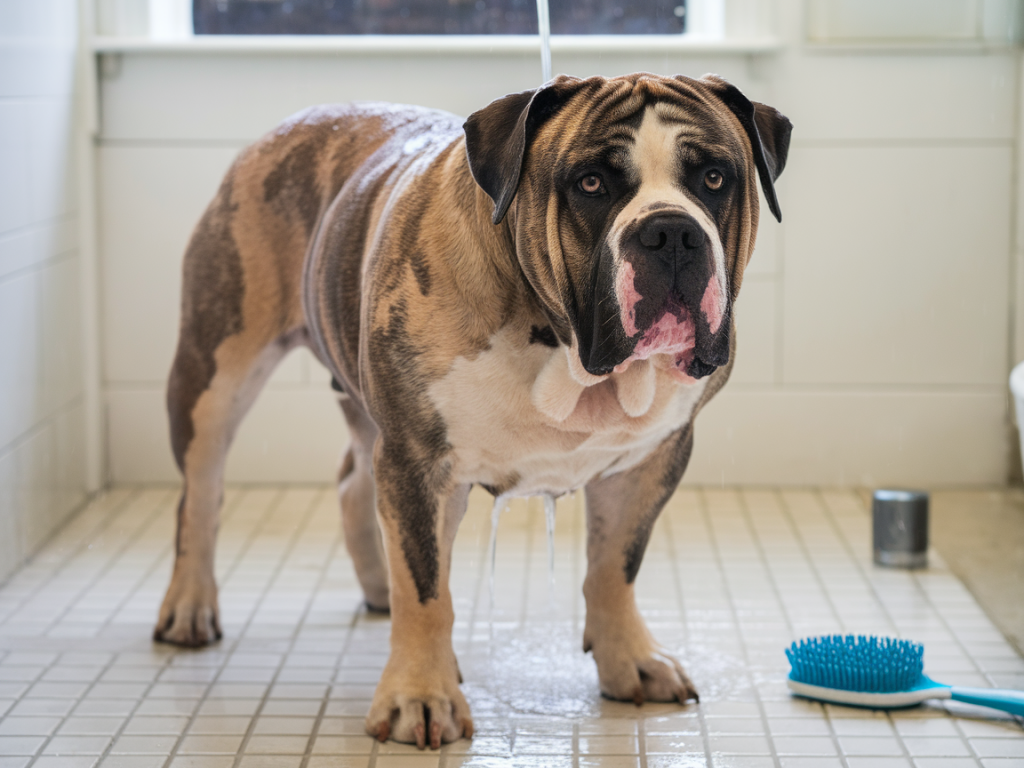
As someone who has raised and rehabilitated many Bullmastiffs, I know firsthand how much some of them dread baths and nail trims. These are large, powerful dogs with sensitive skin and often a history of negative experiences that make grooming a stressful event. Over the years I’ve developed a calm, positive routine that builds trust and reduces fear — not by forcing compliance, but by breaking the process into manageable steps and rewarding each success. Below I share the exact approach I use at Shadowguard Bullmastiffs, with tools, timing, and troubleshooting tips so you can create a routine that your dog actually tolerates — and eventually, may even enjoy.
Start with mindset: patience, predictability and short sessions
Before you touch a brush or a clippers, change your expectations. Bullmastiffs respond to calm leadership, not rushed corrections. That means planning short, frequent sessions rather than long marathons. Aim for 5–10 minute sessions for young or highly anxious dogs, increasing duration only as confidence grows. Keep everything predictable: same room, same time of day, same person when possible.
Build trust through handling exercises
I begin grooming training away from the tub or nail clippers. For weeks (or longer for more fearful dogs) I do daily handling exercises to desensitize them to touch.
Desensitize to tools before using them
Most dogs dislike nail clippers or running water because the tool is associated with discomfort. I keep tools in sight well before using them, allowing the dog to sniff them, lick a treat near them, and receive praise. For nail trims I often clicker-train the sound of the clippers: click and treat when the dog calmly sniffs clippers, then progress to touching the paw with the clippers without trimming.
Equipment I recommend
Having the right tools can make a big difference.
| Tool | Why I use it |
|---|---|
| Glide nail grinder (e.g., Dremel 7300) | Grinders are often less scary than clippers and allow gradual shortening. Work slowly to avoid heat build-up. |
| Non-slip mat | Prevents slipping in bath and during nail trims; a stable footing reduces anxiety. |
| Short-haired grooming brush | Gentle on Bullmastiff coats and good for regular touch-ups to reduce the need for baths. |
| Dog-safe shampoo (hypoallergenic) | Bullmastiffs can have sensitive skin; I use tear-free, pH-balanced formulas like Earthbath or Vet-recommended options. |
Bathing: slow introduction and comfort first
I treat the bath like a multi-step training exercise rather than a single event. For many dogs, the bath is only part of the problem — hauling them into an unfamiliar space or wetting their face sometimes triggers the panic.
After bathing, towel-dry calmly, use a quiet hair dryer only if the dog tolerates it, and reward the end of the session with something special (a Kong stuffed with peanut butter or frozen treats). I never rush the dog out of the bath in a way that reinforces panic — the bath should end on a positive note.
Handling nail trims: step-by-step
Nail trims can be physically awkward with a large dog. I teach Bullmastiffs to offer their paw voluntarily.
For dogs who truly panic despite desensitization, I sometimes use brief, light sedation prescribed by a vet for safety. This is a last resort and should be used sparingly and under professional guidance.
Calming aids and extra measures
Sometimes behavioral training needs a little help. I commonly use:
Safety and health checks during grooming
Grooming is also an opportunity to monitor your dog’s health. Look for:
I keep a simple grooming log for each dog at Shadowguard, noting dates of baths, nail trims, and any skin or ear issues. This helps spot patterns early and informs vet discussions.
When to call a professional
If your Bullmastiff becomes aggressive during grooming, shows signs of severe pain, or if you accidentally cut the quick and bleeding won’t stop, stop and get professional help immediately. Some dogs need muzzle-trained handling or vet-supervised sedation during grooming; there’s no shame in seeking help — safety for you and the dog is the priority.
Grooming Bullmastiffs who hate baths and nail trims is rarely quick, but it is absolutely possible with consistency, patience and the right rewards. Focus on tiny wins, celebrate them, and gradually build a calm, ritualized routine that your dog can rely on. If you’d like, I can share a step-by-step weekly grooming plan I use for Rescue dogs at Shadowguard Bullmastiffs — just ask and I’ll post it on the site.