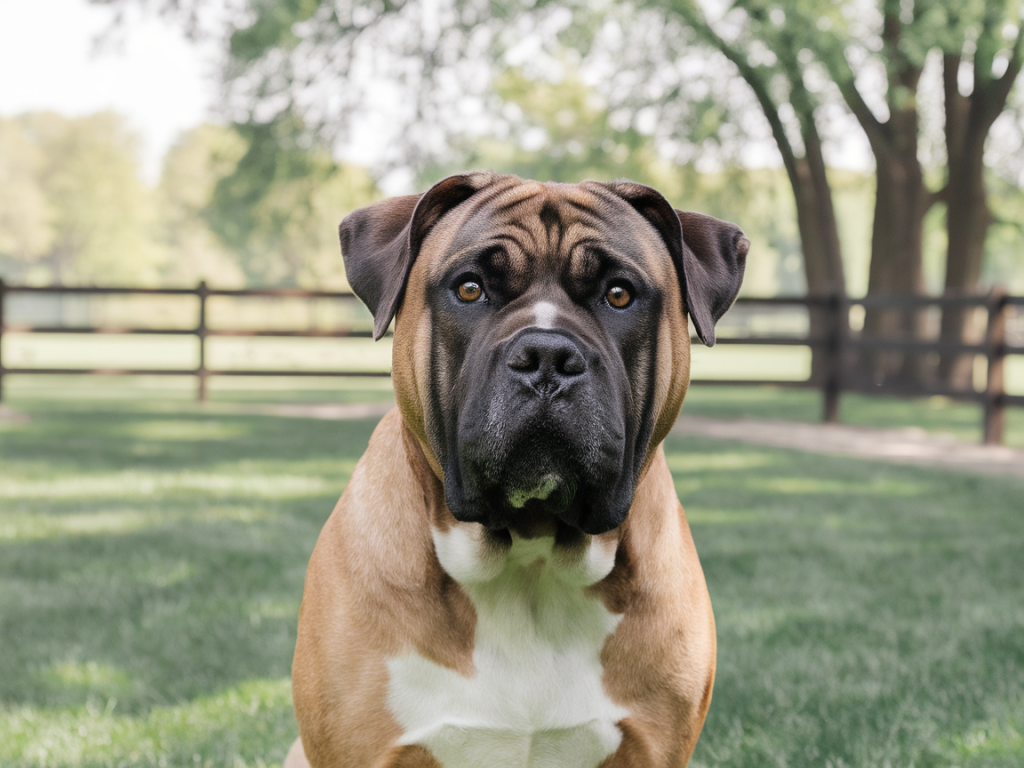
When a rescue Bullmastiff first arrives at my home, I treat the situation like caring for someone who’s just left a storm. They’re often exhausted, confused and guarded. Over years of rescue and rehoming work I’ve honed a practical, predictable approach that helps a fearful Mastiff move from dread to curiosity, and finally to trust. Below I share eight steps I use at Shadowguard Bullmastiffs — each one rooted in experience, veterinary guidance and gentle, science-backed behaviour work.
Set the stage: calm, predictable environment
Before attempting any interaction, I make the home as calm and consistent as possible. That means a quiet room with minimal foot traffic, a comfortable bed, fresh water and the same routine each day. Bullmastiffs thrive on predictability. I place their bed where they can observe the house without being in the middle of activity — a safe vantage point helps them feel in control.
Step 1 — Respect distance and body language
One of the first mistakes well-meaning people make is trying to force eye contact or physical closeness. I never reach for a new dog. Instead, I let them set the pace. I watch for micro-signals: yawns, lip-licking, a turned head, or hard staring. If I see signs of stress, I back off and give space. Over time, the dog learns that stepping away from me is safe — and that I won’t punish or corner them for it.
Step 2 — Build predictable routines
Routines are anchors. I establish a feeding, walking and sleeping schedule from day one. Even if the dog is nervous, knowing the next event is predictable reduces anxiety. I use the same door to go out, the same leash and the same short walk route at first. Later I slowly vary routes, but only once the dog shows consistent calmness.
Step 3 — Use food as a bridge
Food is one of the most powerful trust-builders. I carry high-value treats like cooked chicken, hot dogs cut into small pieces, or soft commercial treats such as Zuke’s Mini Naturals. I toss treats on the ground so the dog can take them without feeling pressured. Once the dog is comfortable taking food near me, I progress to offering treats from an open palm — never from above the head, which can feel threatening.
Step 4 — Teach basic choices, not commands
When fear is high, I avoid heavy obedience drills. Instead, I give the dog simple, consistent choices to empower them: “Sit or stay” only when they appear relaxed, and “come” in a positive, reward-based way. I reward any small approach or interaction, not just perfect responses. Rebuilding confidence is about repeated successes, not immediate obedience.
Step 5 — Controlled, gradual desensitisation
Desensitisation means exposing the dog to mild versions of whatever scares them — at a distance and with lots of rewards. If a Mastiff is afraid of doorways, I will stand across the room and reward calm behaviour when the dog notices the door but doesn’t flee. Over days and weeks I reduce distance and increase normal household sounds, always moving at the dog’s comfort level.
Step 6 — Positive counter-conditioning
Counter-conditioning pairs a previously negative stimulus with something the dog loves. For a dog who panics at the vacuum, every time the vacuum is on at a very low distance I break out the best treats and play. The goal is to change the emotional response: from “vacuum = scary” to “vacuum = good things happen.” This takes patience and many short, successful sessions rather than long, overwhelming ones.
Step 7 — Safe socialisation and controlled introductions
I socialise slowly and on the dog’s terms. For other dogs, I use calm, confident, vaccinated adult dogs that understand boundaries — often rescue-savvy companions who tolerate newcomers. Introductions are done with leashes loose, parallel walking first, then brief sniffing from a safe angle. For people, I instruct them to avoid direct eye contact and to crouch sideways, offering treats only if the Mastiff shows interest.
Step 8 — Seek professional support when needed
Some behaviours require a veterinarian or certified behaviourist. If a Mastiff shows extreme reactivity, resource guarding, or medical pain, I consult a vet first to rule out physical causes. For complex fear responses I work with qualified professionals who use force-free methods — look for a Certified Applied Animal Behaviourist (CAAB) or a force-free trainer. Medication or supplements (like Gabapentin for pain or SSRIs in severe cases) are sometimes helpful, but only under veterinary supervision.
Practical tips, tools and products I recommend
From my experience, a few practical items consistently help:
Quick progress checklist
| First 48 hours | Quiet space, basic routine, minimal handling, vet check |
| First week | Food-based trust building, short calm walks, observe body language |
| Weeks 2–6 | Gradual desensitisation, basic choices, low-pressure socialisation |
| Long term | Consistent routine, enrichment, ongoing training and vet support |
Trust-building is rarely linear. Expect setbacks and celebrate tiny wins. A tail wag, a relaxed yawn, or a dog choosing to rest near you are all major milestones. If you check this process and take each step at the dog’s tempo, you’ll be amazed how quickly a fearful Bullmastiff can learn that people are predictable, safe and full of treats.