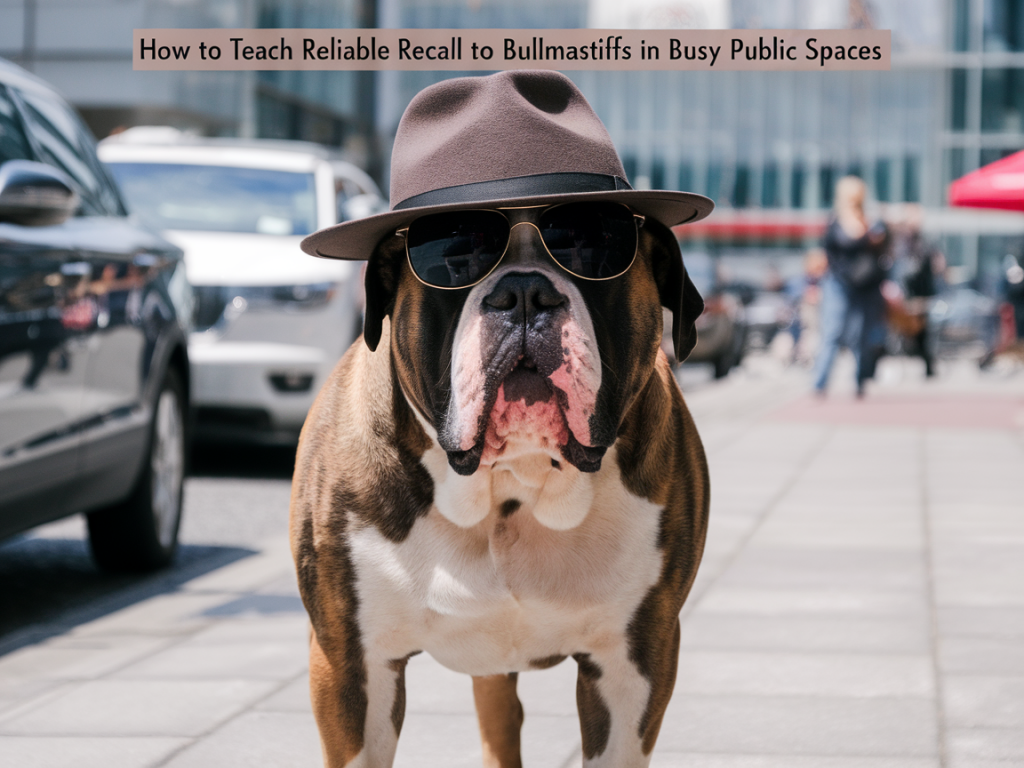
I’ve trained dozens of Bullmastiffs to come back when called in parks, streets and busy beaches. It’s one of the most rewarding — and sometimes frustrating — parts of responsible ownership. Bullmastiffs are intelligent, independent and easily distracted by scents, animals and people. Teaching a reliable recall in busy public spaces takes patience, planning and the right approach. Below I share the methods that have worked for me over the years, including step-by-step progressions, equipment I trust and troubleshooting tips for common problems.
Start with the fundamentals at home
Before you even think about busy parks, your dog must have a solid foundation. At home, away from distractions, teach a bright, consistent recall cue. I use the word ”come” in a cheerful tone — always the same word, never mixed with a scolding voice. Use high-value rewards (rotisserie chicken, liver treats, or a favorite toy) and reward every successful recall at the start. Short, frequent sessions work best: 5 minutes a few times a day.
Key elements at this stage:
Introduce controlled distractions
Once your Bullmastiff is happily coming inside, begin adding mild distractions. I’ll have a family member toss a ball or play with a tug toy while I call the dog. The goal is to make the act of returning more rewarding than the distraction. Always reward with something better than what they were doing. If your dog was chasing a squeaky toy, reward with a piece of cooked meat or a favorite tug game — something that clearly beats the distraction.
A few drills I use:
Transition to long line work
The long line (15–30 m) is an indispensable tool. It allows freedom while maintaining safety and control in public. I use a 20 m biothane long line for durability and easy cleaning — brands like EzyDog and Kurgo make good options. Let your Bullmastiff explore, then call them in. If they don’t come, gently reel them in and reward when they reach you. Over time you’ll be able to give a single “come” and let the line go slack because the dog chooses to return.
Important long line rules:
Gradual exposure to public spaces
Take it slow. I spend weeks in progressively busier locations. A typical progression looks like: quiet backyard → empty park → early-morning park → midday park with people → busy weekend park. At each step, keep the dog on a long line until the recall is consistent. Timing is everything: pick moments when the dog is motivated — maybe just before they find a particularly interesting squirrel trail.
While in public:
Verbal tone, body language and engagement
Your voice and body matter as much as the reward. I call in an upbeat, rhythmic voice and open my arms, squat down, or offer a play invitation. Bullmastiffs read human signals well — a welcoming posture often makes the choice to return easier. Avoid calling them back to punish; they’ll learn that responding means trouble and won’t come the next time.
Proofing the recall around high distractions
High-distraction proofing is where many owners hit trouble. Gradually practice with controlled intensities: another dog at a distance, a jogger, cyclists, children playing. Use a helper with a calm dog for “parallel play” scenarios so your Bullmastiff experiences other animals nearby while still choosing to come.
Some practical proofing exercises:
When your dog won’t come: troubleshooting
If your Bullmastiff ignores a call, don’t panic. Here’s what I do:
Safety gear and legal considerations
Always be aware of local leash laws. Use a long line if the area prohibits off-leash dogs. Carry a lightweight clicker, high-value treats in a treat pouch and a spare harness or slip lead for emergencies. Microchipping and ID tags are non-negotiable — many escapes happen in busy areas.
Consistency, patience and realistic expectations
Some Bullmastiffs will generalize recalls quickly; others need more repetitions. Be patient and consistent. Make coming to you predictable and rewarding. If you travel or change routines, plan a few refresher sessions. With time, positive reinforcement and steady proofing in increasingly busy environments, your Bullmastiff can learn a dependable recall that keeps them safe and lets you enjoy off-leash time together.