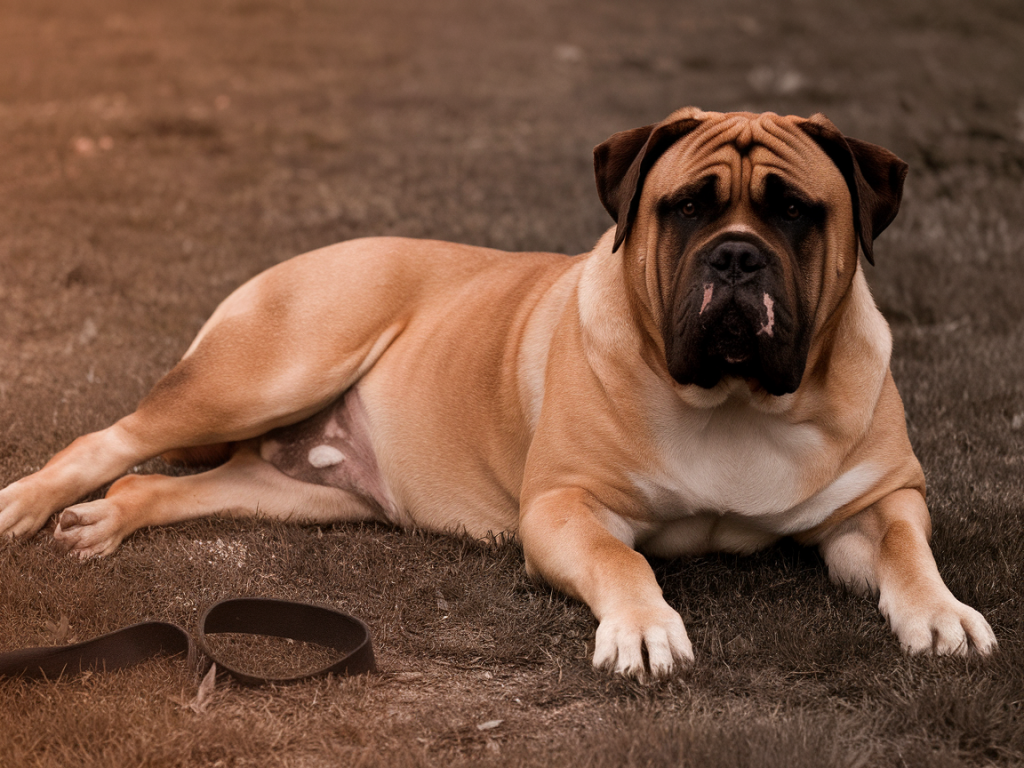
I’ll never forget the first time I suspected bloat in one of my Bullmastiffs. It was late at night, he was restless, pacing between the kitchen and the bedroom, standing with a strange, uncomfortable posture, and then began to retch without bringing anything up. My heart dropped. I’d read about gastric dilatation-volvulus (GDV) for years, but nothing prepares you for the real thing: how rapidly a confident, strong dog can become seriously unwell. Over the years I’ve dealt with several close calls and have learned how to spot the early signs and what to do immediately while we race to the vet. Below I share practical, experience-grounded advice so you can act fast if your Bullmastiff shows early signs of bloat.
Why Bullmastiffs are at risk
Bullmastiffs are deep-chested, heavy-chested dogs — a body type that predisposes them to GDV. That doesn’t mean every Bullmastiff will get it, but it does mean owners should be vigilant. GDV isn’t just “stomach upset”; the stomach can fill with gas, rotate, and cut off blood supply, causing shock and rapid deterioration. The sooner you recognize it and get veterinary care, the better the outcome.
Early signs to watch for
These signs can be subtle at first. When I teach new owners, I emphasize watching for behavior changes more than waiting for obvious physical changes. Early recognition can make the difference between emergency surgery and a worse outcome.
Immediate steps to take before you leave for the vet
When I notice these signs, I follow a clear routine so I don’t fumble in an emergency. Keep a printed checklist near your phone or entryway and keep your car prepped with a blanket, leash, and a crate for rapid transport.
What not to do
I’ve seen well-meaning owners try techniques that can be dangerous. Don’t attempt these:
What the vet will likely do
Once you arrive, the clinic often moves fast: oxygen, IV fluids to support circulation, pain relief, and imaging (X-ray) to confirm dilation and whether rotation (volvulus) has occurred. If volvulus is present, emergency surgery is usually necessary to de-rotate the stomach and tack it (gastropexy) to help prevent recurrence. Even if the stomach hasn’t twisted yet, severe dilation may still require decompression or surgery depending on the dog’s condition.
Practical prevention tips I use with my dogs
Prevention lowers the chance of a life-threatening emergency. These are practical habits that have helped me across multiple litters and rescues.
Quick emergency checklist (table)
| Seen early signs (retching, pacing) | Call vet, keep calm, don’t feed |
| Distended belly or pale gums | Immediate transport, monitor vitals, prepare blanket/crate |
| Dog weak or collapsed | Emergency vet now — high priority |
| At home prevention | Smaller meals, slow feeder, no vigorous post-meal exercise |
When you live with big-boned, deep-chested dogs like Bullmastiffs, vigilance is part of responsible ownership. Trust your instincts: if your dog seems “off” in a way you can’t explain, it’s better to be safe and get a professional opinion. Over the years, acting quickly has saved dogs I love — and that’s what I want for every member of the Shadowguard community.