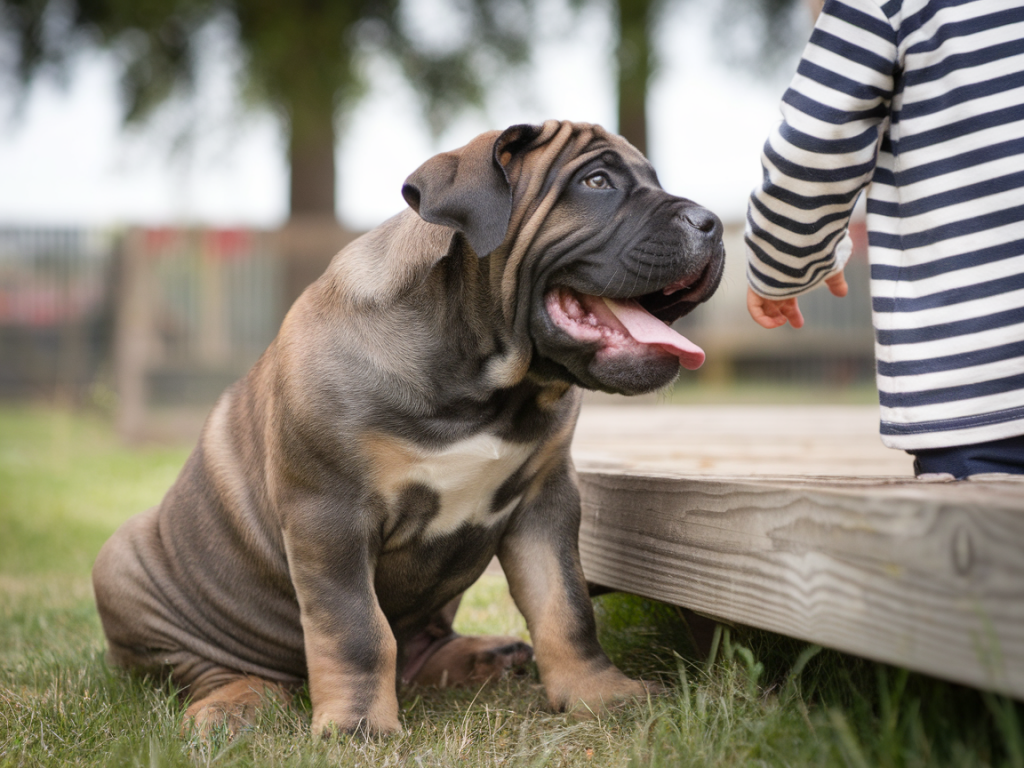
I still remember the first time a new litter's eyes opened in my kitchen — that fragile wobble, the tentative sniffing of the world. Socialization during those first 16 weeks shapes how a Bullmastiff puppy will relate to people, other dogs and the wider world for the rest of its life. Over decades of breeding, training and rescue work, I’ve learned there’s a balance to strike: push too little and fear can take root; push too fast and you can overwhelm a sensitive pup. Here’s my practical, experience-based guide to socializing Bullmastiff puppies safely with humans and other dogs in the first 16 weeks.
Why the first 16 weeks matter
Those first four months are a critical period of social development. Puppies are biologically primed to learn who and what the world is — people, other dogs, noises, surfaces, and routines. Positive experiences during this window make it much easier to raise a confident, well-adjusted adult. For Bullmastiffs, a breed that can be naturally protective and sometimes stoic, early positive exposure reduces the risk of fear-driven guarding or reactivity later on.
Work closely with your vet on vaccinations and safe exposure
Before you start introducing your pup to public spaces, have a frank talk with your veterinarian about vaccinations and local disease risk. I always follow vet guidance strictly: supervise early home visits with vaccinated, trustworthy dogs; use controlled environments for stranger introductions; and avoid high-traffic dog parks until the puppy has completed core vaccinations.
Start inside: human handling and household sights
Right away, make the home itself a classroom.
- Regular gentle handling: touch paws, ears, mouth and tail daily for a few minutes. I do this while feeding or during quiet cuddle time so handling equals comfort.
- Introduce common household sounds at low volumes — vacuums, doorbells, hairdryers. Gradually increase volume only if the puppy stays relaxed.
- Carry out normal activities near the pup: cooking, kids playing, someone on a laptop. Make these events predictably positive with small treats or soft praise.
People of all kinds: a measured, positive plan
Bullmastiffs often bond closely with a small group, so it’s essential to gently expand their circle early.
- Invite friendly visitors who understand puppy handling. Ask them to sit, let the pup approach, and reward the pup for calm investigation.
- Include people wearing hats, glasses, uniforms, or carrying umbrellas. These “odd” appearances can be startling later if not introduced now.
- Teach new people to offer treats at knee height rather than looming over the puppy — this avoids accidental intimidation.
Introducing other dogs: choose carefully
Not all dogs are appropriate social partners for a young Bullmastiff. I never recommend unsupervised play with unknown adult dogs before vaccinations are complete.
- Start with calm, vaccinated adult dogs who are known to be good with puppies. A mellow Labrador or older rescue with a steady temperament can be ideal.
- Keep initial meetings short and on neutral ground — a fenced yard is often better than inside the home where the mother or littermates may feel territorial.
- Watch body language closely: loose bodies and relaxed play bowing is good. Stiffness, raised hackles or intense fixation means you intervene and separate calmly.
- Use parallel walks: walk your puppy a safe distance beside a friendly adult dog to let scent and presence be absorbed without pressure.
Exposure schedule (sample)
Here’s a simple sample schedule I often recommend to new owners. Adapt it for the puppy’s temperament and vet advice.
| Age (weeks) | Focus | Examples |
|---|---|---|
| 0–3 (neonatal to early) | Handling, littermate social play | Daily gentle handling, mother-led teaching, short supervised human visits |
| 3–6 | Household sounds & people | Sound desensitization, people with different appearances, short supervised adult dog intro |
| 6–12 | Controlled external exposure | Car rides, garden exploration, visits from calm vaccinated dogs, puppy classes if vaccinated |
| 12–16 | Broader socialization & confidence building | Short walks in quiet public spaces, supervised meet-and-greets, basic training classes |
Puppy classes and training
I’m a big supporter of positive-reinforcement puppy classes once your vet has signed off. Look for classes that emphasize social skills rather than rough play, and that require proof of vaccination. Good instructors manage group size, carefully pair pups by temperament, and teach owners to read canine body language.
For training gear I prefer flat collars and a well-fitted harness (brands I’ve used effectively include Julius-K9 harnesses for control and FitPaws for bite work later on). Avoid choke or prong collars for young pups — we want trust, not fear.
Reading puppy body language: what to look for
Knowing when to step in is crucial. Watch for these signals:
- Comfort signs: loose body, wagging tail at mid-level, play bows, relaxed panting.
- Stress signs: tucked tail, whale eye (showing the whites), lip licking, freezing, yawning when not tired.
- Aggressive or highly aroused signs: stiff body, fixed stare, growling with stiff posture — stop the interaction and separate calmly.
Socializing shy or fearful pups
In rescue situations I often handle pups with fear backgrounds. The key is patience and layering small successes.
- Use desensitization: introduce the fearful stimulus at a very low level and pair it with high-value rewards (small bits of cooked chicken or paste-like treats such as Dreamies in the UK).
- Counter-conditioning: teach a simple “look” or “touch” cue so the pup learns to check-in with you in scary situations.
- Short, frequent sessions win. Ten two-minute positive exposures beat one stressful 30-minute session.
- Consider consulting a professional force-free behaviorist for intense fear cases; early guidance prevents long-term problems.
Common mistakes to avoid
- Rushing introductions: don’t force contact. Let the puppy set the pace or they’ll shut down.
- Using punishment: it suppresses fear temporarily but damages trust. Positive reinforcement works far better.
- Overexposure: too many new things at once can overwhelm. Space out experiences so each one can be absorbed positively.
- Ignoring handler behavior: if children are present, supervise closely and coach them on gentle interaction. I often teach kids to sit and let the puppy come to them.
Socialization requires consistency and empathy. Take notes: which people or situations caused worry, which brought joy, and adjust your approach. With calm, progressive exposure during those first 16 weeks, Bullmastiff puppies usually grow into steady, affectionate adults who can confidently share life with people and other dogs.