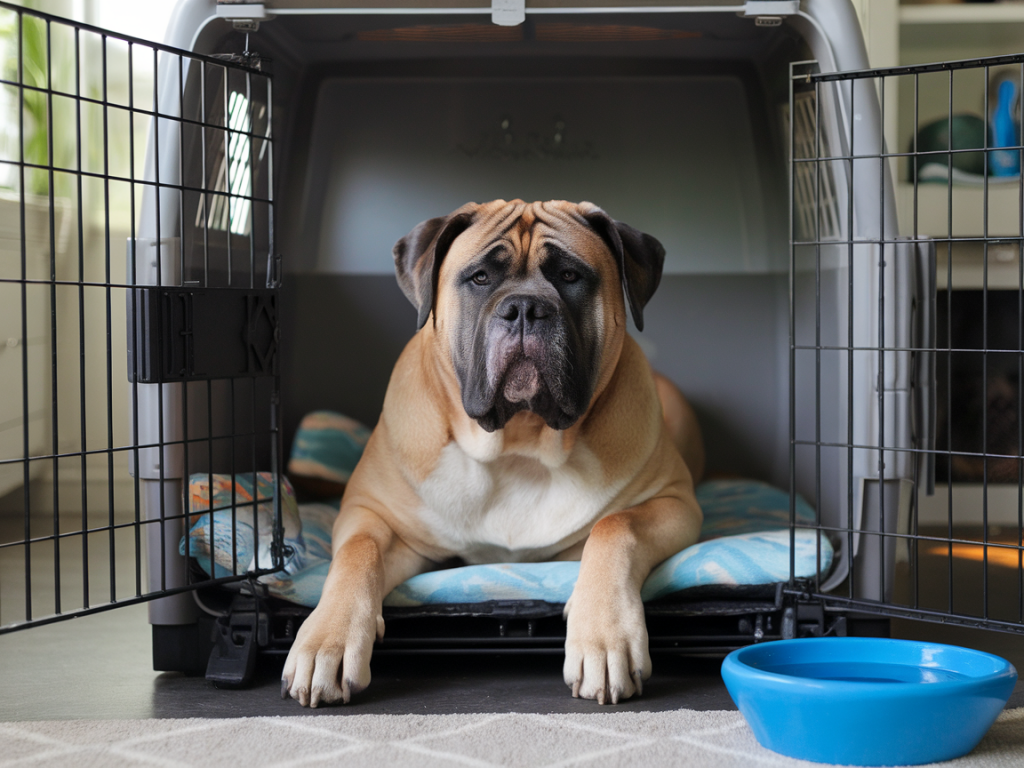
Crate training a Bullmastiff doesn’t have to be a battle of wills. Over the years with my own dogs and the rescue cases I’ve taken in, I’ve learned that the right timing, the right crate setup, and a few comfort-minded tricks can turn a crate from a source of anxiety into a safe, restful den. Below I’ll share what I do, step-by-step, and why — so you can help your Bullmastiff settle in calmly and confidently.
Why crate training matters for Bullmastiffs
Bullmastiffs are powerful, protective dogs with a strong den instinct. A crate provides a predictable, secure space that helps with house training, recovery after veterinary procedures, and reducing stress during change. But because this breed is so sensitive to their humans and their environment, a poor crate experience can create long-lasting fear. That’s why we focus on gentle, positive steps.
Best timing: when to start and how long sessions should be
Start crate training as early as your puppy’s third or fourth day in your home — but take it at their pace. For adult Bullmastiffs, begin as soon as possible and be patient: previous negative experiences can take longer to reverse.
Key timing rules I follow:
Choosing the right crate and size
Size matters more than many people think. Too big and the crate becomes a bathroom; too small and it becomes a source of frustration. For Bullmastiffs, I recommend a heavy-duty metal crate with a divider or a solid-sided den crate if they prefer more privacy.
| Adult Bullmastiff | Recommended crate size |
|---|---|
| Small adult (up to 50 kg) | 48–54 inches |
| Large adult (50+ kg) | 54–60 inches |
If your Bullmastiff is still growing, use a crate with a divider so you can adjust the space. Brands I’ve used and trust include Midwest iCrate for durability and Smiling Paws for more den-like, soft-sided options for lower-anxiety dogs.
Setting the crate up for comfort
A crate should feel inviting. I aim for a balance between comfort and practicality so the crate is a place they choose to be, not something they’re forced into.
Step-by-step gradual introduction
I follow these practical steps for a calm, positive crate introduction:
Addressing common anxiety signs and solutions
Some Bullmastiffs may whine, paw, or scratch at the crate door. Here’s how I handle those behaviors compassionately:
Crate training for rescue or previously traumatized dogs
Rescue Bullmastiffs often need extra patience. Many come from uncertain backgrounds and may have a negative history with confinement. My approach for rescues emphasizes choice and control:
Nighttime and travel considerations
At night, I place the crate near the bed for puppies and anxious adults. The human presence reduces stress and helps with nighttime toileting needs. For travel, choose a crate rated for the type of transport you’ll be doing; the Sherpa and Gunner brands are solid for vehicle transport and airline travel respectively.
For dogs that need more reassurance in a new environment, a worn t-shirt with your scent in the crate can be comforting.
Maintenance and safety
Keep the crate clean and check for wear regularly. Replace bedding that’s soiled or flattened. Ensure there are no loose wires or sharp edges on metal crates. For chewers, avoid small, easily swallowed items in the crate.
Finally, remember that a crate is part of a broader training plan: consistent routines, exercise, enrichment, and gentle leadership make all the difference. With patience and the right setup, your Bullmastiff can learn to love their crate as their personal safe space.