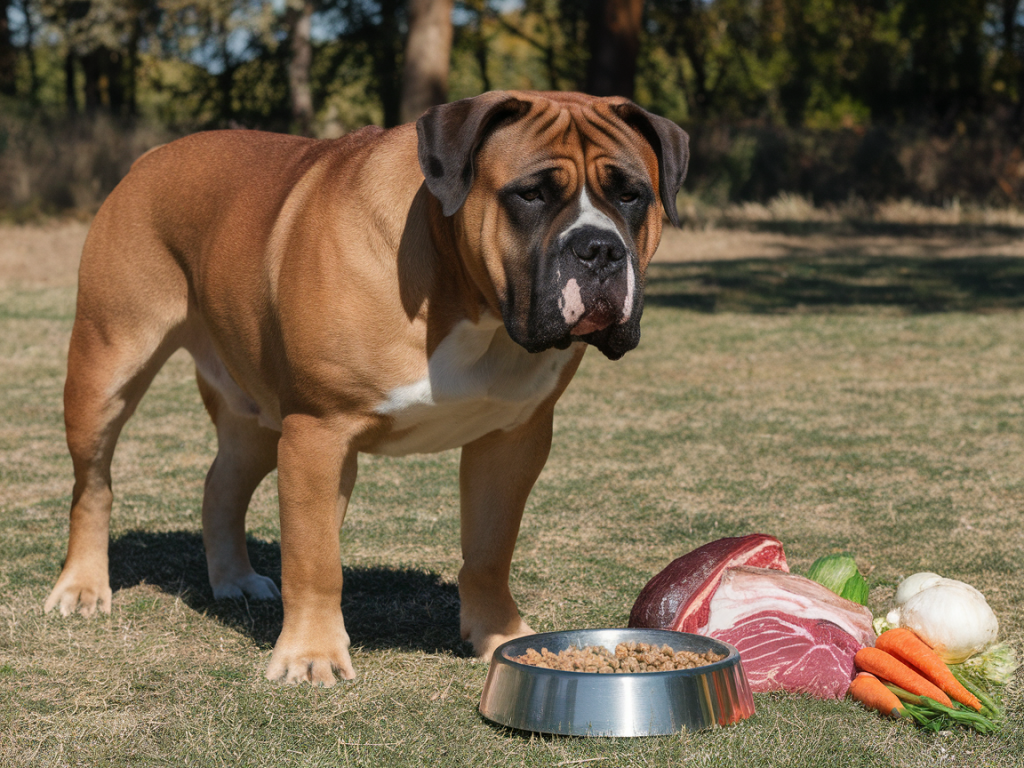
When you’re raising a working Bullmastiff — whether he’s a family guardian, a scent-detection trainee, or a farm helper — nutrition is never an afterthought. Over the years with Shadowguard Bullmastiffs I’ve fed many diets, worked alongside vets and canine nutritionists, and rehabilitated dogs from rescue with varied feeding histories. In this article I’ll walk you through the practical pros and cons of kibble, raw and home-cooked diets for a working Bullmastiff and share how I decide what’s best for a particular dog.
What working Bullmastiffs need from their diet
Before choosing a diet format, remember what a working Bullmastiff requires: steady energy for bursts of activity, high-quality protein to maintain muscle mass, balanced fats for skin and coat and joint-supporting nutrients to protect large-breed joints. Because Bullmastiffs are prone to hip and elbow issues and certain digestive sensitivities, the diet also needs to be predictable and digestible.
Kibble (commercial dry food): convenience and consistency
Kibble is the go-to for many owners because it’s convenient, easy to portion and frequently formulated to meet AAFCO standards. For a working Bullmastiff I look for:
Brands I’ve used and seen good results with include Orijen and Royal Canin Large Breed for balanced kibble options, and Hill’s Science Plan or Purina Pro Plan when vet-prescribed formulas were needed during recovery.
Benefits:
Drawbacks:
Raw diets: power and practical risks
Raw feeding is popular among people who want whole-food nutrition and highly digestible meals. For a robust, active Bullmastiff, raw diets can shine if done correctly: they often provide cleaner muscle-building protein, higher fat for energy and improved coat condition.
However, raw feeding requires structure. I only recommend raw if you’re prepared to:
Benefits:
Drawbacks:
Home-cooked diets: control and commitment
Cooking your Bullmastiff’s food gives you complete control over ingredients and meal timing, which can be excellent for dogs with allergies or digestive issues. For working dogs, a cooked diet that emphasizes lean muscle-building proteins, complex carbohydrates for sustained energy and joint-supporting nutrients can be ideal.
But like raw, home-cooking must be evidence-based. I always recommend following a veterinary nutritionist’s recipe rather than improvising. A balanced home-cooked meal typically includes:
Benefits:
Drawbacks:
Quick comparison table
| Diet Type | Pros | Cons |
|---|---|---|
| Kibble | Convenient, consistent nutrients, easy portion control | Quality variable, less fresh, can promote weight gain if overfed |
| Raw | High palatability, bioavailable nutrients, good coat/muscle | Bacterial risk, requires careful balance and handling |
| Home-cooked | Fully controllable, great for allergies, adjustable calories | Time-consuming, risk of imbalance without professional recipe |
Practical guidelines I follow for working Bullmastiffs
Across diets I use a consistent approach with my working dogs:
When I switch a dog between diets
If I move a dog from kibble to raw or home-cooked, I start small: 25% new diet mixed with 75% old for 3 days, then 50/50 for 3–4 days, then 75/25, and finally full change. Working dogs can show changes quickly — improved stamina, brighter coat, but also digestive upsets if the switch is too fast.
Signs a diet needs changing
Watch for:
If you see these, consult your vet and consider trying an elimination protocol or switching protein sources.
Final practical sample day (home-cooked style) for a 40–50 kg working Bullmastiff
Example — adjust amounts for body weight and activity:
Always ensure fresh water is available, and reduce food amount slightly before intense exercise to lower bloat risk.
Choosing between kibble, raw and home-cooked often comes down to your household situation, the dog’s history and how much time you can commit. Whatever path you choose, make decisions based on evidence, involve your vet or a canine nutritionist, and monitor your Bullmastiff’s weight, joints and energy closely — those are the true measures of a diet that’s working.