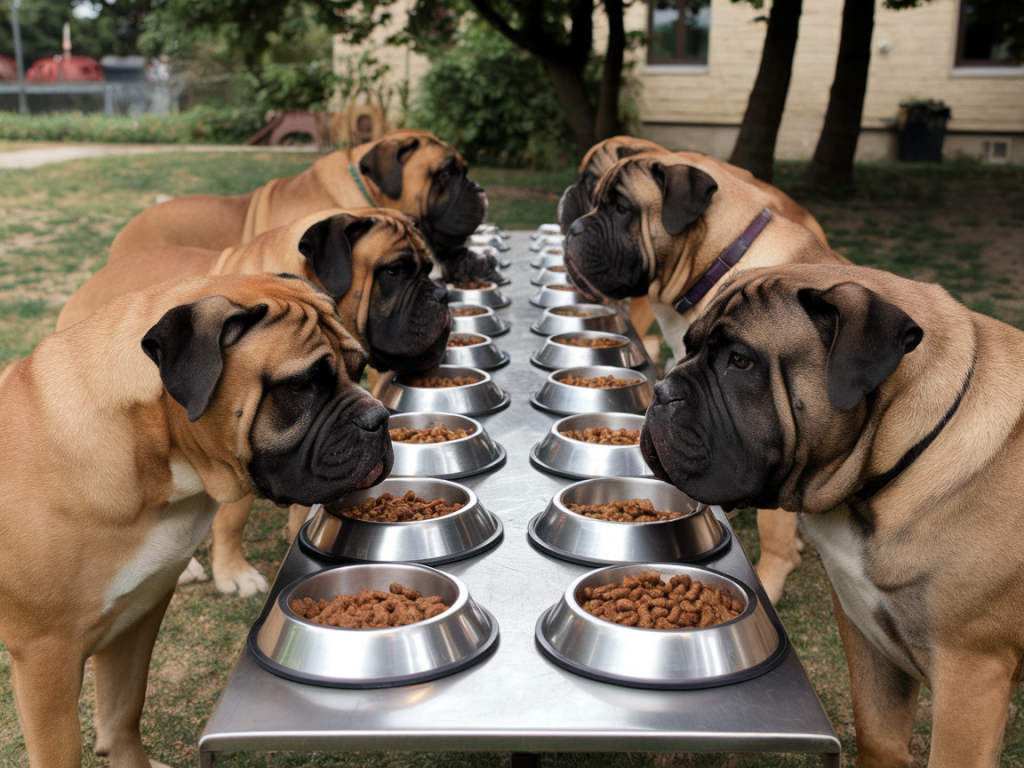
I’ve fed entire litters and groups of adult Bullmastiffs for decades, and one thing I’ve learned the hard way is that mealtime can either be calm and efficient or the spark that ignites resource guarding and fights. In this post I’ll share the mealtime setups, timing strategies and safe solutions I use at Shadowguard Bullmastiffs to keep feeding times peaceful — whether you have two dogs or a dozen.
Why bullmastiffs can fight at mealtimes
Bullmastiffs are loyal, confident and food-motivated. Those traits make them wonderful companions, but they also mean a dog that perceives competition at the bowl may act to secure food. From my experience working with breeders and rescued dogs, the common triggers are:
Understanding the trigger is the first step to preventing fights. Once you know whether the issue is speed, space or scarcity, you can choose the right strategy.
My basic mealtime principles
I follow a few non-negotiable rules for every feeding session:
Physical setups that work
Choose a setup based on your number of dogs, your space and their personalities. Here are the systems I’ve used successfully.
Separate rooms
When I had multiple bitches in whelp and a few adoptees in for rehabilitation, feeding in separate rooms was the most reliable method. Close a door or use baby gates to create temporary feeding rooms. This eliminates visual triggers. It’s not glamorous, but it works.
Gated hallway lineup
For two to four dogs, I often feed in a hallway with baby gates spaced so each dog has their own feeding niche. The gates create a visual barrier while allowing me to monitor them. I use sturdy metal gates (for example, Carlsons or Regalo) because Bullmastiffs can test flimsy plastic ones.
Crate or mat separation
Crates can be useful if your dogs are comfortable and crate-trained. Place bowls at the open crate door and allow each dog to eat inside. Alternatively, give each dog a designated mat and call them to their mat before placing the bowl. Mat work builds calm focus and a strong “place” cue.
Elevated or hidden feeding stations
For very food-driven dogs, elevated bowls or feeding in different parts of the room help. I’ve also used feeding stations behind a couch or a low table to obscure bowls from each other — simple, but it reduces the temptation to steal.
Timing strategies: when and how to feed
Timing affects behaviour as much as physical separation. Here’s the timing framework I use:
Feeding tools and tricks
These are my go-to tools for safer meals:
Dealing with resource guarding safely
If a dog shows resource guarding — stiffening, growling, snapping — take immediate management steps and then start a behaviour plan.
Training exercises I use
Below are simple exercises I run through with new or problematic dogs. Each session is brief but consistent.
Example feeding schedule and setups
| Situation | Setup | When to use |
|---|---|---|
| Two calm adults | Parallel mats 2–3m apart, bowls placed simultaneously | Regular daily feeding |
| One fast eater + one slow eater | Slow feeder for fast dog + separate room for slow dog | Prevent stealing and bullying |
| Rescue dog with guarding history | Crate separation + hand-feeding + behaviour plan | Initial rehabilitation phase |
| Large multi-dog household | Staggered auto-feeders or crate line-up with supervised release | Large numbers or limited space |
Real-life example from Shadowguard
We had a rescue male, “Rufus,” who lunged at the other dogs if they came near his bowl. I separated him and started with hand-feeding and a “bowl approach” desensitization: I would toss a tiny, higher-value treat into his bowl when a helper walked in the room. Over two months, Rufus went from stiff guarding to accepting a person near his bowl — and eventually to eating calmly with a mat-signal. Management plus a slow, consistent training plan made the difference.
If you want, tell me how many dogs you have, their feeding personalities (fast, slow, guarder) and your space constraints, and I’ll suggest a specific setup you can try at home.