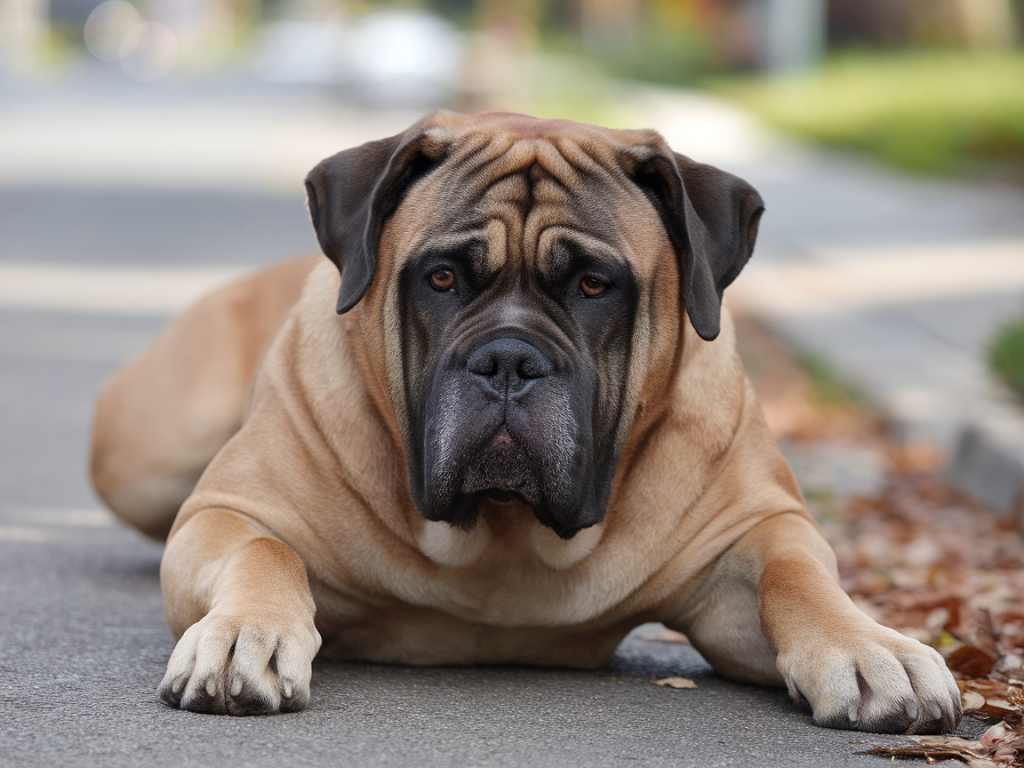
I’ve spent decades living with and caring for Bullmastiffs, and one hard lesson I’ve learned is that these dogs are masters at hiding pain. Their stoic nature and strong bond with their people mean they’ll often mask discomfort until it becomes severe. Over the years I’ve learned to recognize subtle, unusual behaviours that often point to chronic pain—signs that are easy to miss if you only watch for limping or obvious distress.
Why Bullmastiffs hide pain
In my experience, Bullmastiffs are bred to be steady and calm; it’s part of their charm. That same temperament can make them look deceptively fine even when something is wrong. They also tend to be food-motivated and eager to please, so they’ll keep behaving “normally” to stay close to you. Because of that, watching for small changes in behaviour, routine and posture is essential.
12 unusual behaviours that can signal chronic pain
Below are the signs I’ve seen repeatedly in dogs with underlying issues such as osteoarthritis, intervertebral disc disease, hip/elbow dysplasia, dental pain or internal problems. Each behaviour might be benign on its own, but together they tell a story.
Subtle changes in sleep position — A dog that used to sleep sprawled on their side and suddenly curls up or avoids lying on a particular flank may be protecting a sore joint.Slow to get comfortable — Taking a long time circling or position-shifting before settling isn’t laziness; it can be stiffness or joint pain.Reluctance to climb or jump — If your Bullmastiff used to hop into the car or onto the bed but now hesitates or uses ramps, suspect pain in hips or knees.Changing gait without a limp — A shortened stride, toe-dragging, or a ‘tricky’ front-to-back transition while turning can indicate discomfort in the spine or limbs.Increased irritability around touch — Growling or snapping when you touch a specific area (chin, back, hip) is a very clear red flag—don’t punish the dog for protecting a painful spot.Excessive licking or chewing one limb or flank — This can be self-soothing behaviour in response to pain or neuropathic sensations.Loss of interest in favourite activities — A dog who no longer wants to play tug or go for longer walks is often trying to avoid worsening pain.Changes in appetite that are subtle — Not finishing meals or being slower to eat can be linked to chronic pain or discomfort, including dental pain.Toileting changes — Accidents in the house, hesitation to climb stairs to go out, or straining can stem from painful joints or spine issues.Stiffness after rest, worse in the morning — If your dog needs to “warm up” for a while and is slow after waking, that’s classic arthritic pain.Less interest in social contact — A dog that previously sought cuddles but now moves away or prefers to be alone can be avoiding pressure on painful areas.Vocalisation you haven’t heard before — Low moans, sighs, or whines when rising or during movement are signs worth noting.How to check your Bullmastiff at home—what I do
I always start with a calm, methodical check so I don’t miss patterns. Do this when your dog is relaxed (after a short walk or after lying down).
Observe them rising and walking 10–20 metres at a normal pace. Note any change in stride or reluctance.Palpate gently along the spine and each limb—watch their face and ears. If they flinch or stiffen at a specific spot, mark it down.Watch for asymmetry: does one shoulder land differently? Is one hip held higher?Check joints for warmth and swelling—arthritic joints can feel slightly thickened.Look in the mouth for red gums, loose teeth or bad breath that could indicate dental pain.What to record before you visit the vet
Vets rely on owners’ observations. When I bring a dog in, I prepare a short, focused report. Here’s what helps most:
| Behaviour | Describe changes (e.g., “hesitates to jump into car,” “moans when rising”). |
| Onset & duration | When did you first notice it and has it been steady, gradual, or intermittent? |
| Triggers | What makes it worse or better (exercise, rest, cold weather)? |
| Video | 10–20 seconds of walking, rising and turning. Slow-motion clips on a phone are gold. |
| Medication & supplements | Record current doses, brands and timing (including joint supplements like Dasuquin, Cosequin). |
| Weight & diet | Recent weight changes and current food—obesity worsens joint pain. |
Immediate steps to help before the vet visit
There are practical, low-risk things I implement immediately to reduce suffering and collect useful information:
Reduce strenuous exercise — Shorten walks and avoid stairs, rough play or jumping. Use a harness to help them up if needed.Provide supportive bedding — Memory foam beds (brands like PetFusion or Big Barker) help distribute pressure and reduce pain at night.Use ramps or steps — To prevent jumping into cars or onto furniture; I keep a portable ramp in the car for older dogs.Control weight — Gradual weight loss relieves joints. Switch to a measured feeding plan; I often recommend a veterinary diet if weight’s a problem.Try heat therapy — A warm compress (not hot) applied for 10–15 minutes can ease stiffness; I avoid ice unless there’s a fresh injury.Pain diary — Note times when pain seems worse (morning, after exercise) and any response to interventions.What not to do
A few things I see well-meaning owners do that can make diagnosis or care harder:
Don’t give human medications. Ibuprofen, paracetamol (acetaminophen) and other human drugs can be toxic to dogs.Don’t start long-term NSAIDs without vet guidance. Short-term use might mask symptoms the vet needs to see; always get the right dose and monitoring plan.Avoid aggressive physical manipulation or forced exercise if the dog resists—it can worsen injuries.How vets will approach chronic pain—and how you can help
At the clinic, vets usually combine physical examination, orthopaedic tests, imaging (X-rays, sometimes CT or MRI) and bloodwork. You can help them by bringing your notes and the videos you took. Be specific about patterns—saying “slower in the morning” or “resists getting in the car” gives the vet clues about hips, spine, or other structures.
Modern pain management is multi-modal. In many of my dogs’ cases we’ve used a combination of prescription NSAIDs (with bloodwork monitoring), gabapentin for neuropathic pain, joint supplements, targeted physiotherapy, weight management, and environmental changes like ramps and supportive bedding. For some chronic conditions, I’ve worked with canine physiotherapists on low-impact hydrotherapy—these sessions can dramatically improve mobility when done correctly.
Finally, trust your instincts. If you feel something is off, keep a record and push for investigation. Bullmastiffs give us their best selves; it’s our job to look beyond the surface and give them the care they deserve.