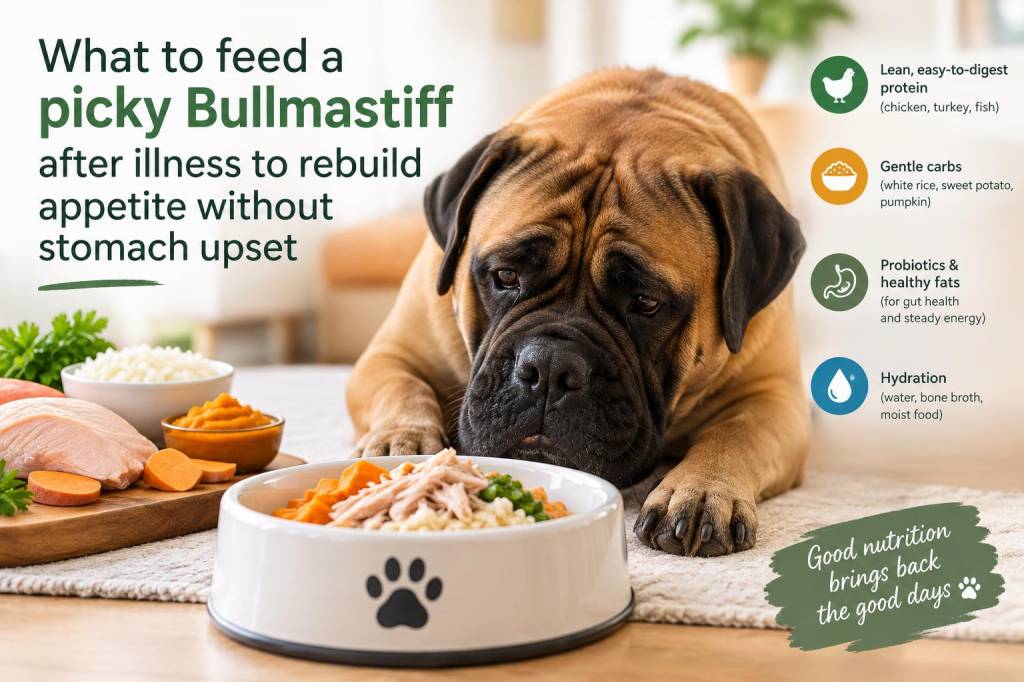
When a Bullmastiff has been ill, I never rush straight into a full meal and hope for the best. A dog that has lost appetite after sickness often has a sensitive stomach, lower energy, and a cautious attitude toward food. With a giant breed like Bullmastiff, I pay close attention to what I offer, how much I offer, and how fast I reintroduce normal feeding. My aim is always the same: restore appetite without triggering vomiting, loose stools, nausea, or another setback.
In my experience, the most effective approach is calm, gradual, and simple. I avoid rich extras, sudden food changes, and large meals. I also watch the dog closely for hydration, comfort, and enthusiasm around food, because a poor appetite after illness can be a normal recovery issue, but it can also signal pain, fever, medication side effects, or a problem that needs veterinary attention.
Why appetite often drops after illness
After sickness, many Bullmastiffs need a little time before they feel ready to eat normally again. Digestive upset, antibiotics, pain medication, stress, dehydration, and general weakness can all reduce interest in food. Some dogs also develop a temporary dislike for the food they ate while they were unwell, especially if they associated it with nausea.
I have seen dogs turn away from a bowl simply because they feel uncertain. That is why I prefer to keep the first meals after illness predictable, mild, and easy to digest. A Bullmastiff is a large dog, but size alone does not mean a large meal is wise during recovery. In fact, a giant stomach can make a sudden heavy meal more likely to cause trouble.
What I offer first when a Bullmastiff needs a gentle restart
For a picky Bullmastiff recovering from illness, I usually start with a bland, low-fat meal in small amounts. My first choices are often:
- Boiled skinless chicken, finely shredded
- Plain white rice, softly cooked
- Plain boiled turkey, if chicken is not appealing
- Plain canned pumpkin in a small amount for stool support
- Plain cooked oatmeal, if rice is not tolerated well
- A small amount of warm water or low-sodium broth with no onion or garlic
I keep seasoning out of the bowl. No salt, no spices, no onion, no garlic, and no fatty drippings. I want food that is easy on the stomach and still smells inviting. A little warmth can make a big difference, because a slightly warmed meal gives off more aroma and often seems more tempting to a dog that has gone off food.
If a dog has been vomiting, I am even more cautious. I begin with tiny portions and wait to see whether the meal stays down before increasing the amount. For a Bullmastiff, that can mean offering just a few spoonfuls at first rather than a full serving.
What I avoid during recovery
Some foods that seem appealing to people can make recovery harder for a Bullmastiff with a delicate stomach. I avoid anything rich, greasy, or heavily processed at first. I also avoid big treats, table scraps, dairy, and high-fat meats. Even a small indulgence can be enough to upset a recovering digestive system.
I am also careful with sudden changes to kibble. If a dog has been eating one brand for months, I do not switch to something new and expect the stomach to accept it immediately. If a change is needed, I introduce it slowly, mixing a little of the new food into the old food over several days, and even slower if the dog has just been sick.
Common items I leave out during early recovery include:
- Fatty cuts of meat
- Cheese and rich dairy products
- Butter, oils, and gravy
- Highly seasoned human food
- Large biscuits or hard treats right away
- Raw food unless a veterinarian has already approved it for that dog
How I tempt a picky Bullmastiff without upsetting digestion
Once I know the stomach is settling, I work on appetite in a gentle way. I use smell, texture, and routine to encourage eating. Bullmastiffs can be sensitive, and some become suspicious of food when they do not feel fully well. I never force the issue. Pressure can make a picky dog even more reluctant.
Here are a few methods I have found useful:
- Serve food slightly warm, not hot
- Add a spoonful of plain boiled chicken broth with no onion or garlic
- Offer smaller meals more often instead of one large bowl
- Feed in a quiet place with little distraction
- Use the same bowl and same location to build confidence
- Hand-feed a few pieces at first if the dog seems hesitant
I also pay attention to timing. Some dogs eat better after a short rest or a calm walk. Others prefer food later in the day when nausea has eased. I observe the dog rather than forcing my own schedule onto the recovery process.
What I feed once appetite begins to return
When a Bullmastiff starts eating again without vomiting or diarrhea, I move toward a more complete diet, but still gradually. If the dog normally eats a quality kibble, I may mix in a little of that food with the bland meal and increase the proportion slowly. If the dog needs a softer option, I sometimes use a veterinary recovery diet or a highly digestible wet food for a short period.
Some commercial foods can help during this stage. I have seen good results with veterinary recovery diets such as Hill’s Prescription Diet i/d, Royal Canin Gastrointestinal, and Purina Pro Plan Veterinary Diets EN, but I only use them when they suit the dog’s condition and when a veterinarian agrees. These diets are designed to be gentle and palatable, which can help a recovering Bullmastiff regain appetite without overwhelming the stomach.
If I want to keep things simple at home, I may use a rotation like this:
| Day | Meal style | What I look for |
| 1 | Tiny bland portions | No vomiting, no worsening nausea |
| 2 | Small bland meals more often | Steady interest, normal stool starting |
| 3 | Bland food plus a little regular food | Better appetite, stable digestion |
| 4 | Gradual return toward usual diet | Comfort, energy, normal stools |
This is not a rigid plan. I adjust according to the dog in front of me. A Bullmastiff that had a mild stomach bug may recover quickly, while a dog coming back from surgery, infection, or medication side effects may need more time.
Hydration matters as much as food
When a Bullmastiff has been ill, I always think about water as well as food. A dog may refuse meals partly because he is dehydrated. I offer fresh water at all times and watch for signs that drinking is not enough. If the dog is reluctant to drink, I may encourage small sips with a cleaner bowl, a quieter setting, or a little low-sodium broth mixed with water.
I also check the gums, energy level, and skin elasticity. Dry gums, weakness, sunken eyes, or a lack of urine can mean the dog needs prompt veterinary care. Appetite loss can become more serious when dehydration is involved, especially in a giant breed.
When I call the veterinarian
I do not wait too long if a Bullmastiff refuses food for more than a day or if the dog seems unwell in other ways. I contact a veterinarian sooner if I see vomiting, bloating, abdominal pain, diarrhea that does not improve, fever, shaking, coughing, labored breathing, or extreme lethargy. I also seek help if the dog is drinking but not eating at all, or if there is a sudden change in behaviour.
Because Bullmastiffs are large and deep-chested, I never ignore signs that could suggest a more serious issue. Appetite loss after illness can be ordinary recovery, but it can also hide a problem that needs treatment. If a dog seems uncomfortable, I would rather check early than guess.
What I have learned from picky eaters
Over time, I have learned that a recovering Bullmastiff usually does better with patience than with persuasion. The bowl should feel safe, not stressful. The food should smell inviting, not heavy. The portions should be small enough to succeed, because one good meal is more useful than one giant meal that causes a setback.
I also think consistency matters. Once I find a food the dog tolerates, I keep it steady for a while. Recovery is not the moment for experimentation. A picky Bullmastiff after illness needs reassurance more than novelty, and the stomach usually rewards that calm, sensible approach.
When appetite begins to come back, I stay observant. I watch for quick eating, slower chewing, interest in the bowl, stool quality, and overall comfort after meals. Those small signs tell me more than any single feeding session ever could.