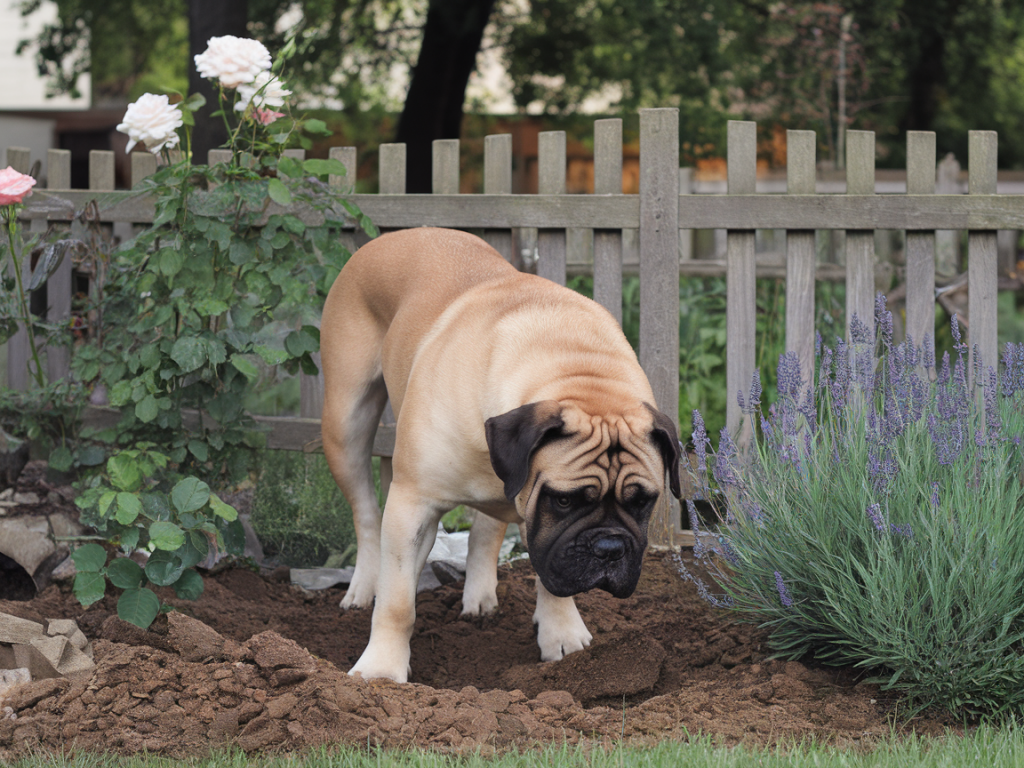
I’ve spent decades living with Bullmastiffs, and one of the most important things I’ve learned is that a well-planned garden keeps both dog and owner happy. Bullmastiffs are powerful, curious and, yes, stubborn diggers — but with the right fencing, digging solutions and plant choices you can create a safe, durable outdoor space your dog will love. Below I share practical tips I use at Shadowguard, based on hands-on experience with rescues, litters and older family companions.
Understanding the Bullmastiff mindset in the garden
Before we get into materials and planting lists, it helps to remember what motivates a Bullmastiff outdoors. They’re territorial, scent-driven and often attracted to digging because of boredom, seeking a cool spot, hiding bones, or following a scent. They’re also heavy and can test weak fence lines simply by leaning or pushing. Designing a Bullmastiff-friendly garden means addressing motivation, durability and safety.
Fencing that actually works
When I fence a garden for a Bullmastiff, I think in terms of three layers: visible boundary, reinforced base, and secure gates. Here are the options I recommend, depending on your layout and budget.
- Solid panel fencing — Timber close-board panels (1.8–2.0 m high) are great for privacy and to reduce visual triggers. Make sure panels are fitted into concrete gravel boards to prevent rot and to stop dogs from pushing under.
- Steel or welded wire mesh — For a strong, long-lasting option use 2.5–3mm steel mesh with small apertures (50x50mm or similar) fixed to sturdy posts. This is excellent where dogs may attempt to squeeze or poke noses through.
- Combination fences — I often use a timber fence with welded wire added at the bottom on the inside. This gives the look of a timber fence with the reinforcement low down where dogs test it.
- Electric or invisible fences — I don’t recommend invisible fences for Bullmastiffs as a primary boundary tool. They don’t prevent physical escapes (jumping over or pushing through) and can create anxiety if used incorrectly.
Reinforcing the base — stop the under-dig and push-throughs
Digging under a fence is one of the most common escape routes. These are the practical solutions I use:
- Concrete gravel boards — Install pressure-treated gravel boards under wooden panels. They stop rot and form a physical barrier low down.
- Buried wire apron — Fix welded wire to the bottom of the fence and lay an “apron” of wire flat on the ground extending into the garden. When dogs dig they hit the wire and give up. Use galvanised steel for longevity.
- Concrete strip — For a permanent solution pour a shallow concrete strip (10–15cm deep) along the fence line. It’s more work but extremely effective for determined diggers.
- Metal edging or paving stones — Bury metal or stone edging so dogs can’t get leverage under panels. This is an easy retrofit for many gardens.
Gate security
Gates are a weak point. I fit heavy-duty latches at two heights (one at dog nose level and one higher where a person can reach), reinforce gate frames with metal brackets and use strong hinges. A gate that swings inward is better — Bullmastiffs leaning on an outward-swinging gate can push vegetation or panels loose.
Digging solutions that let them be dogs
Rather than trying to stamp out digging completely, I create controlled digging areas. This keeps their instincts satisfied and protects flower beds.
- Designated dig pit — Dig a shallow pit, line the bottom with sand and top with loose soil. Bury toys or treats to encourage them to use that area. I place mine in a shaded corner and swap it with fresh sand every few months.
- Raised beds and borders — Use raised stone or timber beds for plants — Bullmastiffs are less likely to dig into raised structures. Secure the sides against pushing.
- Mulch choices — Avoid loose bark mulch where possible; it encourages digging. I prefer slate chippings or pea shingle in areas near the house and sturdier surfaces closer to fences.
- Supervision and enrichment — Rotate toys, use food puzzles, and take regular walks to reduce boredom-driven digging. A tired Bullmastiff is far less likely to excavate your lawn.
Safe plant choices for Bullmastiff gardens
Many common garden plants are toxic to dogs. I always choose hardy, non-toxic plants that tolerate trampling. Below is a quick table summarising safe and risky options.
| Safe (non-toxic) | Avoid (toxic or irritating) |
|---|---|
|
|
Also be careful with fruit trees — fallen fruit can ferment and make dogs very ill. Keep compost bins secured; some common kitchen scraps are harmful.
Surface choices and wear areas
Bullmastiffs are heavy and can churn up soft lawns. I create defined paths with materials that stand up to wear:
- Pea shingle or crushed stone — Good for paths and play areas, drains well and discourages digging.
- Artificial turf — If you want a green look with durability, high-quality artificial turf with proper sub-base works well. Ensure good drainage and a non-toxic infill.
- Flagstone or paving — Use in areas where dogs lie down or eat. It’s easy to clean and robust.
Shade, water and winter care
Bullmastiffs overheat easily. Provide shaded zones — a covered patio, large trees or purpose-built shade sails. In summer keep a paddling pool or shallow water bowl available; many of my dogs love to lie on cool stone. In winter, clear snow from paths and provide dry bedding areas; raised beds and covered shelter help avoid muddy, chilled coats.
Training and boundaries
Physical measures are necessary, but training reinforces them. Use positive reinforcement to mark the dig pit, reward staying away from borders, and teach “leave it” and “stay” at gates. For new puppies I pair fence training with short walks around the perimeter on a harness so they learn boundaries and become comfortable with the garden layout.
At Shadowguard we mix practical modifications with consistent training: a secure fence, a tempting dig pit, safe plants and daily enrichment reduce escapes and destructive behaviour. If you’d like, I can share a checklist you can print for a garden makeover or a sample layout I use for rescue dogs that need a calm, secure outdoor area.