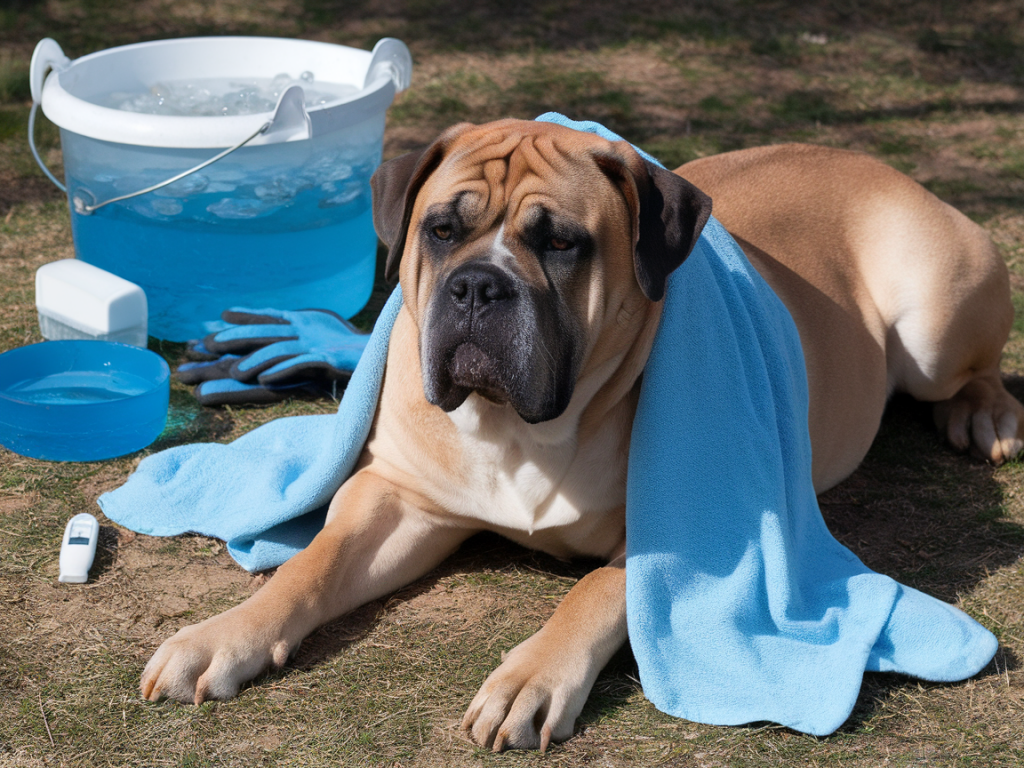
Summer in the UK can be unpredictable, but when temperatures climb, my Bullmastiffs — like many of yours — are at real risk of heatstroke. Over the years at Shadowguard Bullmastiffs, I’ve had to act quickly more than once. What follows is a practical, experience-based emergency action plan you can use the moment you suspect your dog is overheating. It’s written in the first person because these are techniques I’ve used, tested and refined through hands-on rescue and everyday care.
Recognising heatstroke in Bullmastiffs
Bullmastiffs are heavy, short-muzzled dogs with dense bodies — characteristics that make them more susceptible to overheating. Early recognition is crucial. Watch for:
If you see any of these signs, treat them as an emergency and act immediately. Time counts.
Immediate safety steps (first 1–5 minutes)
Do not overthink — start with these basics immediately while organising transport to your vet or emergency clinic.
Immediate cooling techniques I use and trust
Cooling needs to be controlled. Rapid cooling with ice or cold water can cause vasoconstriction and worsen internal temperature regulation. Here are safe, effective techniques I use at home and in rescues.
Throughout this process, keep checking the gum colour, breathing, and responsiveness. If your dog becomes unresponsive, stop cooling and focus on airway and breathing while en route to the vet.
Safe DIY cooling setups for travel and home
I always keep simple, portable kit items ready for hot days or long trips:
For car travel: park away from the sun, run the engine with air conditioning if it’s safe, and never leave your dog unattended inside a vehicle even for a few minutes. On extremely hot days I avoid long trips whenever possible.
Temperature target and monitoring
A rectal thermometer is the most reliable way to know core temperature. If you have one and are comfortable using it, aim to reduce the dog’s temperature to about 39–39.5°C (102.2–103.1°F). Do not attempt to cool below 39°C — over-cooling can be dangerous. If you don’t have a thermometer, cool until heavy panting eases and gum colour returns to normal, then stop and proceed to the vet.
What to avoid before you reach the vet
Some well-meaning actions do more harm than good. From my experience, avoid the following:
What the vet will do and why quick transport matters
At the clinic, veterinarians will check temperature, blood pressure, bloodwork and organ function. They may provide IV fluids, oxygen, medications to control seizures or blood clotting issues, and continued temperature control. Heatstroke can cause delayed complications — clotting disorders, kidney injury, and muscle breakdown — so the sooner professional care begins, the better the outcome.
Aftercare I recommend based on rescue cases
After discharge, I advise close monitoring at home and a follow-up within 24–72 hours. Key post-heatstroke care steps I use:
Prevention — because heatstroke is largely avoidable
Prevention is the best medicine. From my breeding and rescue work, I always emphasise:
If you carry some of the simple items I mentioned — spray bottle, towel, fan and a route to your nearest emergency clinic — you’ll be far better prepared. Heatstroke is scary, but with calm, prompt action you significantly improve your dog’s chances. If you’re unsure or worried at any point, call your vet and get to an emergency clinic quickly — I always err on the side of speed when dealing with Bullmastiffs and heat.