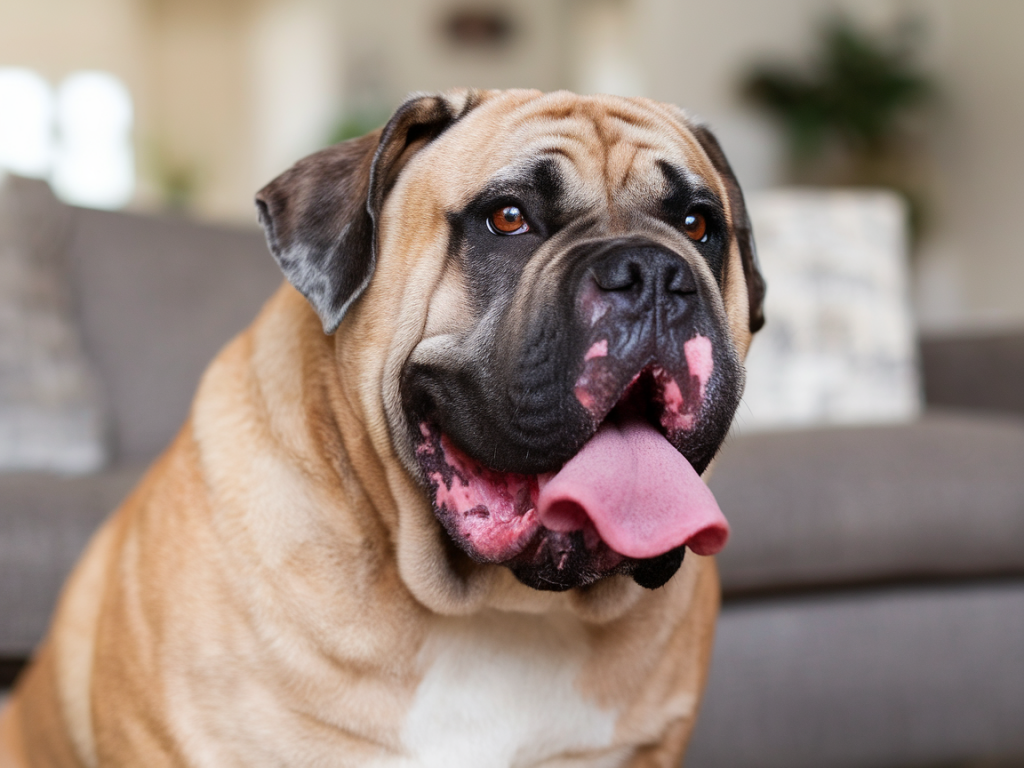
When a Bullmastiff struggles to breathe it’s one of the most frightening situations an owner can face. I’ve been there — dozens of times with dogs I’ve bred, fostered and worked with through rescue. Brachycephalic breeds like Bullmastiffs don’t have the extreme flat faces of Pugs or Bulldogs, but they still carry an increased risk of obstructive airway problems. Knowing how to assess the severity of a breathing crisis and how to act calmly and effectively can make a real difference before you reach your veterinarian.
How to recognise a brachycephalic breathing crisis
First, let’s be clear about what we mean by a “breathing crisis.” This isn’t normal snoring or occasional snorting — it’s when your dog is showing signs of significant airway obstruction or respiratory distress. Watch for:
- Open-mouth breathing at rest when your dog is not exercising or in hot weather.
- Excessive, noisy inspiration — loud snoring, stertor (soft snoring) or stridor (high-pitched noisy breathing on inspiration).
- Extended neck and head position, trying to maximise airflow.
- Cyanosis — blue or grey gums, tongue or mucous membranes indicating poor oxygenation.
- Panic, collapse or loss of coordination, which suggest severe hypoxia.
- Prolonged recovery after exercise or minor exertion.
Trust your instinct — if your dog looks worse than usual or you sense the breathing difficulty is escalating, treat it as urgent.
Quick on-the-spot assessment
When a dog shows signs, perform a calm, rapid assessment. I always try to keep the animal as quiet as possible — excitement and struggling only worsen airway obstruction.
- Environment: Move to a calm, cool, well-ventilated area. Remove other dogs and reduce noise.
- Position: Allow the dog to lie in a natural position. Some dogs prefer to sit upright, others will sprawl with head extended. Don’t force positions.
- Look at mucous membranes: Quick check of gums/tongue colour gives a rough idea of oxygenation. Pink is good; pale, grey or blue is worrying.
- Count the respirations: Normal resting respiratory rate for large dogs is about 10–30 breaths/min. Much higher rates (tachypnea) are concerning.
- Note the noise: Stertor vs stridor — stertor is low-pitched, often due to soft palate obstruction; stridor is high-pitched and suggests laryngeal or tracheal involvement.
Immediate actions you can take safely at home
These steps are intended to buy time and reduce risk while you prepare to transport to a vet. They are not substitutes for veterinary care.
- Keep calm and keep the dog calm. Speak gently, avoid sudden movements or attempts to force the mouth open unless absolutely necessary.
- Cool the dog down. Overheating intensifies airway problems. Apply cool (not icy) water to the paw pads, inner thighs and around the neck and head. You can use a damp towel. Fans help if the dog tolerates them.
- Remove collars. A tight collar can worsen airflow — replace with a harness for transport if possible. For Bullmastiffs I prefer a broad, padded harness to avoid pressure on the neck.
- Use a short, calm leash. Avoid stressing the dog further. Carry small dogs; for Bullmastiffs, steady, confident guidance is better than pulling.
- Oxygen if available. Some owners who often manage brachycephalic dogs keep a home oxygen kit (concentrator or small portable cylinder) for emergencies. Even a short period of supplemental oxygen can stabilise a dog for transport. If you have one, place a soft oxygen mask over the muzzle or allow oxygen to fill a small tent over the head — avoid forcing a mask if the dog panics.
- Do not give sedatives. Sedatives can depress respiration. Only use medications given by your vet for this specific emergency.
When to go straight to emergency care
Some signs mean you should head to the nearest emergency veterinary clinic immediately:
- Gums that are pale, grey or blue.
- Loss of consciousness, collapse or severe weakness.
- Rapid worsening of breathing in minutes.
- Inability to stand or coordinated movement loss.
If you’re unsure, err on the side of caution and call ahead to your clinic or an emergency hospital so they can prepare oxygen and personnel. Let them know you’re bringing a brachycephalic dog in respiratory distress.
Practical kit I keep ready
From long experience, I recommend preparing an emergency kit and keeping it somewhere you can grab quickly. Mine includes:
- A short, wide padded harness and a flat leash.
- A damp towel and a small fan.
- An oximeter to check oxygen saturation (SpO2) — brands like Contec and CMS50D work fine for dogs when placed on the tongue or inner lip.
- Contact numbers for my vet and 24/7 emergency clinics in the area.
- If you’re frequently dealing with respiratory issues and have vet approval: a portable oxygen concentrator and a soft oxygen mask.
What the vet will likely do
At the clinic, the priority is securing the airway and supporting oxygenation. Typical steps include:
- Immediate oxygen therapy and monitoring with pulse oximetry and blood gases if needed.
- Calm sedation or light anaesthesia to allow airway assessment — paradoxically, a light sedative can reduce agitation and improve breathing in some dogs, but only under veterinary supervision.
- Nasal or oral intubation if the airway is severely compromised.
- Fluids and supportive care to manage shock or other complications.
- Assessment for conditions common in brachycephalics: elongated soft palate, stenotic nares, everted laryngeal saccules, or secondary infections and inflammation.
Long-term management and prevention
After the acute episode is managed, plan with your vet to reduce future risk:
- Surgical correction when appropriate. Many brachycephalic dogs benefit from procedures such as stenotic nares widening, soft palate resection or removal of everted laryngeal saccules. These are breed- and case-dependent but can be life-changing.
- Weight management. Excess weight exacerbates airway problems. A leaner Bullmastiff breathes far easier.
- Avoid heat and stress. Keep exercise moderate in warm weather, provide shaded, cool areas and never leave your dog in a car.
- Regular vet follow-up. Early assessment of airway anatomy can identify dogs who would benefit from preventative surgery before a crisis occurs.
- Training and behaviour. Desensitisation to handling and traveling calmly reduces panic during transport or vet visits.
Reference table — signs and actions
| Sign | What it likely means | Immediate action |
|---|---|---|
| Open-mouth breathing at rest | Mild to moderate obstruction or heat stress | Cool environment, remove collar, monitor, call vet |
| Loud stertor/stridor, anxious | Significant upper airway obstruction | Calm the dog, oxygen if available, go to emergency vet |
| Pale/blue gums or collapse | Severe hypoxia — life-threatening | Immediate emergency transport, call ahead |
| Rapid improvement with cooling/oxygen | Reversible exacerbating factors | Vet assessment within 24 hours and plan long-term strategy |
I can’t stress enough: preparation and calm action save lives. Brachycephalic breathing crises are terrifying, but having a plan, a basic kit and a strong relationship with your vet will make all the difference. If you’ve had a near-miss with one of your Bullmastiffs, share the story on our site — these real-world experiences are where breeders, rescuers and owners learn the best, most practical lessons.