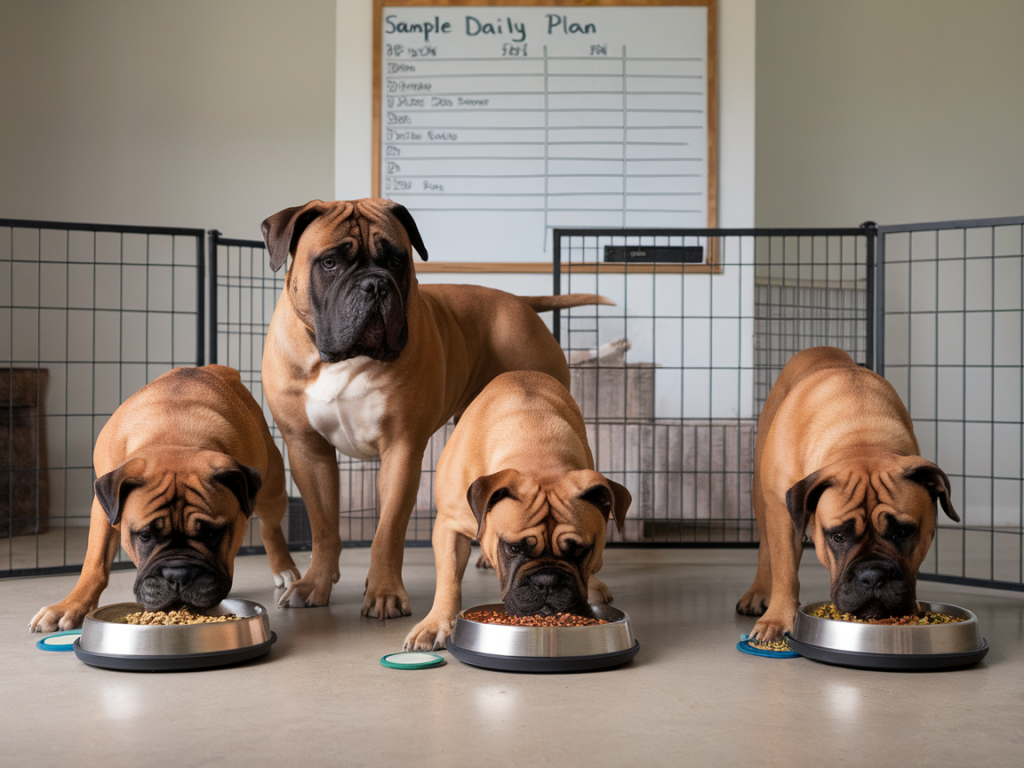
I keep a rotating pack at Shadowguard Bullmastiffs — from adolescent gluttons to stoic seniors with modest appetites. Over the years I’ve learned that feeding multiple Bullmastiffs in the same household is less about a single "perfect" diet and more about routines, observation and systems that protect each dog's health and the household’s peace. Below I share practical routines I use, timed feeding solutions, separation strategies that actually work, and sample daily plans you can adapt to your dogs’ sizes, ages and metabolisms.
Why routines matter with multiple Bullmastiffs
Bullmastiffs thrive on consistency. A predictable feeding routine reduces stress, prevents food guarding or begging, and makes it easier to notice appetite changes that may signal health problems. When several dogs eat together without structure you risk:
Resource guarding and aggressionOvereating by greedy dogs or under-eating by nervous/senior dogsDigestive upsets when dogs compete and swallow too fastSetting a routine helps each dog eat their allocated portion at their own pace while keeping the group calm.
Timed feeders and automatic solutions I trust
Timed feeders are especially useful when: I have different diets (medical kibble vs performance food), need to separate mealtimes, or have to be away during feeding windows. Here are options I recommend and how I use them:
Gravity feeders — Cheap and useful for free-feeders, but I don’t recommend for Bullmastiffs because larger breeds can overeat. Use only if vet-approved for a specific dog.Programmable automatic feeders (e.g., PetSafe Healthy Pet Simply Feed) — Great for measured portions and multiple small meals a day. I use them for dogs on calorie-restricted diets or with early-morning/late-night medication needs.Microchip or RFID feeders (e.g., SureFeed Microchip Pet Feeder) — These are my go-to when dogs are on different diets but live together. Only the dog with the programmed chip can access its dish — perfect if a senior needs a special kibble or a recovering dog must avoid rich food.Slow feeders and puzzle bowls — I pair these with timed feeders to slow bolting. Not all Bullmastiffs tolerate puzzles, but many enjoy a slow feeder mat or a snuffle mat for enrichment.When choosing a feeder, check capacity, portion accuracy, battery vs mains power, and how easy it is to clean. Bullmastiffs are drooly — metal bowls inside feeders usually work best.
Separation strategies that keep peace
Even with reliable feeders, physical and visual separation sometimes becomes necessary — especially during feedings. These techniques keep tensions low and ensure everyone eats their own food.
Separate rooms — Feed in different rooms with closed doors. I use a kitchen gate to manage comings and goings; this is especially useful for new rescues that need low-stress mealtimes.Crate feeding — If your dog is crate-trained and calm in a crate, feeding there can prevent stealing and guarding. Always make crate time positive and remove bowls once dogs finish.Baby gates and exercise pens — A simple panel can create a feeding station for one dog while others eat elsewhere. I like portable pens when I travel with multiple dogs.Staggered feeding — Call each dog one at a time to eat. This works best when dogs are responsive to cues and well-trained to "wait" and "okay."Use of RFID feeders — As mentioned above, these let dogs eat in the same space without food theft because only one dog gets access at a time.Managing different appetites and special cases
Common scenarios I see:
One dog is a vacuum — I pair a measured portion in an automatic feeder with a slow bowl and supervise. If the vacuum dog finishes quickly and targets other bowls, I remove plates as soon as they’re empty and move them away.One dog is picky or a slow eater — Warming food slightly, adding a spoon of plain pumpkin or low-sodium broth, or using a gentle hand-feed session for confidence helps. I never let a picky dog become a grazer; scheduled meals keep them motivated.Seniors or dogs on medical diets — RFID feeders or separate rooms ensure those diets aren’t compromised. I also schedule medications with mealtimes to avoid missed doses.New rescues — I start with full separation during meals until trust around food is re-established. Even seemingly confident dogs can show guarding behaviors when stressed.Sample daily feeding plans
These are examples I use and adapt based on weight, activity, and vet guidance. Portion sizes are illustrative — always follow your vet or feeding guide on the kibble package.
| Dog type | Meals per day | Details |
|---|
| Young adult, high activity (35–50 kg) | 2–3 | Morning: 300–400g (high-protein kibble) in automatic feeder + slow bowl. Midday: small training/snack session (50–100 kcal). Evening: 300–400g. Monitor weight closely. |
| Adult, moderate (35–50 kg) | 2 | Morning: 350g measured. Evening: 350g. Use RFID feeder if sharing space with special-diet dogs. Offer enrichment lick mats post-meal. |
| Senior, low appetite / joint supplements | 2–3 smaller meals | Morning: 200g with joint supplement mixed in. Afternoon: 100–150g soft or moistened kibble. Evening: 200g. Warm slightly and add broth to entice eating. |
| Weight management / prone to bloat | 3–4 small meals | Smaller, evenly spaced meals in slow feeders to reduce bolting. Monitor water intake; avoid vigorous exercise immediately after meals. |
Troubleshooting common problems
If a dog consistently doesn’t eat:
Check for dental pain, systemic illness, or medication side effects with your veterinarian.Offer attractive, vet-approved toppers (e.g., unseasoned boiled chicken, pumpkin) for short periods while diagnosing.Keep meal times short — 15–20 minutes — then remove the bowl. This prevents attention-seeking and encourages appetite on schedule.If competition or guarding appears:
Reinstate full separation while you retrain calm mealtime behaviors.Work with a professional behaviorist if aggression appears. I’ve rehabilitated several guarders using gradual desensitization and counter-conditioning, but safety first.Practical kit for a multi-dog feeding station
Programmable feeder (PetSafe or equivalent)At least one RFID feeder for special diets (SureFeed or similar)Slow feeder bowls and snuffle matsSturdy stainless-steel bowlsBaby gates or exercise pensPortable scale to monitor portions and body conditionConsistency, observation and willingness to adapt are what make feeding multiple Bullmastiffs manageable. Each dog is different, and small changes in schedule or equipment can make a big difference in health and harmony at mealtimes.